
Gift or Right? Flexibility in Practice in Bucharest
What follows draws on interviews with 30 people working in hybrid or remote arrangements in Bucharest, Romania, across a range of work fields, household compositions, ages, and genders. The focus here is narrow: how work itself and what people do, and the position they occupy within organisations, shape their capacity to exercise control over their working lives.
Flexibility is not one thing
When workers and employers talk about flexible arrangements, they usually mean how many days someone can work from home. But the interviews suggest that this is only the beginning of what the word “flexibility” covers. There is spatial flexibility, which is not always as open as it sounds: some workers cannot work from locations other than their registered home address, and others are not allowed to work from other cities. Being remote does not mean being free to work from anywhere.
There is temporal control, which is more complicated. Many workers are still subject to an eight-hour availability requirement regardless of how quickly they finish their tasks. Some are measured by task completion, others by screen presence, and others by a mix of both. These are meaningfully different arrangements, even when all go by the same name. Additionally, there is surveillance. One interviewee, a trainer, has his productivity tracked through click and mouse movement data. If his mouse stops moving during a meeting, the system registers lost productivity, and he must shorten his next break to compensate:
"After a day or two of working from home back-to-back, I feel like a zombie. I actually work much more… I don't take the breaks I should be taking regularly… You tend to eat in front of the computer."
What looks like flexibility can reorganise the working day in ways that remove its natural pauses. When task demands are open-ended, and monitoring is tight, the freedom to organise one's day can also mean that the day has no natural end. So, flexibility is more than the number of days at home. It is also about who controls what those days look like, and what kind of work is being done inside them. And that, it turns out, has several things to do with the position people occupy within their organisations.
Position shapes what is negotiable
For many of the people I interviewed, remote or hybrid work is not something they can claim. It is something they must earn and keep earning. What makes this possible, or not, has to do with the assets people hold: the scarcity and specificity of their expertise, and the authority and standing they have in the workplace (see Wright 2023 for a theory of class that accounts for
those productive assets as well). These shape not only whether someone can work from home, but what kind of control they have over the whole bundle of things that make up their working life: how tasks are organised, when work needs to happen, whether presence is required, and how much say they have over any of it.
Ana, who works at a PR company, shows what a weak position on both counts can produce. Her hybrid arrangement was offered informally, and she knows it can be taken away. Because she experiences it as a gift rather than a right, she ends up overcompensating:
"I was glad my manager agreed to let me work in this way, so I would never have wanted to say, Hey, it is ten in the evening, and I do not feel like doing this task. I preferred to take from my own time and do everything well… I felt like I was showing my gratitude somehow, that she had been flexible and that I had to do everything okay."
She also avoids asking formally about the terms of her arrangement, because an explicit answer might close the door:
"Rather than receive an answer that would constrain me later, and be told, hey, as long as you are junior, you only work from the office… You try to negotiate so that things work out somehow. I think there is also this fear of appearing as a slacker somehow, even though I am much more productive when I work from home."
What Ana's situation shows is that the form of an arrangement and its experience can pull in opposite directions. Formally, there is flexibility. In practice, it produces gratitude, overwork, and a deliberate avoidance of clarity. Working from home becomes a way of proving she deserves it, which means working more. The arrangement exists, but the control it promised never quite materialises in their everyday life.
Someone in a different position arrives at something quite different. An IT worker at a mid-level, on the path to seniority, worked with his team to collectively secure a remote-friendly arrangement even as others in the company were increasingly required to return. What his position gave him was an actual say over how tasks were organised and when presence was required:
"I also have a privileged position of being sought after and called upon by them. At the point where I felt comfortable enough to put some conditions of my own."
That level of task autonomy is entirely out of reach for many of the workers interviewed. Teams matter here as well. Several interviewees belong to teams that operate with fewer office days than company policy formally requires, either through collective negotiation or because a manager maintained a more flexible arrangement after the pandemic and never fully reverted. Within the same company, working realities can differ sharply depending on one’s position.
This also means that the fear of losing a flexible arrangement shapes behaviour well beyond the working day. Ana's overwork is in part a payment she makes to keep what she has. Another interviewee is considering not pursuing the subdomain of law he is most interested in, because changing roles might mean losing the remote arrangement he currently has within his team.
Hybrid and remote work arrangements have become part of how people make career decisions, weigh opportunities, and calculate risks.
Framing arrangements as gifts rather than rights reinforces all of this. When a working arrangement is presented as a concession, something to be grateful for rather than asked for or defended, the perceived cost of challenging it rises. One interviewee was told that her team had kept two remote days and that "they were lucky" because colleagues at the French headquarters had been called back. The sentence condenses a move that appears across several interviews: the terms of work become a favour, and asking for more feels like ingratitude rather than a legitimate claim. In a context where return-to-office policies are spreading, and remote positions feel increasingly scarce, the cost of being marked as difficult outweighs, for most, the benefit of pushing back, which in turn can lead to flexible arrangements with no actual control over one's work or time.
Remote work may also be shifting something in how people think about what belongs to them. The commute came up in many interviews in a similar way: office days now feel like time given to the employer without compensation. One does the same work for the same pay, but those days come with unpaid hours attached. Some say explicitly that commute time should be covered or offset. This is a small but significant shift in categories. It suggests that working from home has not only changed how people organise their days but has begun to change what they think of as theirs and what they feel they can reasonably ask of work.
What the material suggests, taken together, is that control over one's working life is not mainly a matter of individual strategy, disposition, or capacity to set boundaries. It is distributed unevenly, and this distribution follows the lines of what people do, how their work is organised, and what position they occupy within it. What shapes access to genuine control turns out to be a more tangled set of factors than income or occupational domain: the scarcity and specificity of one's skills, seniority, negotiating power within a team, how tasks are organised, and by whom. These cut across conventional categories in ways that are not always visible from the outside. It is also a reminder that how people experience remote work is, in so many ways, entangled with work itself and the labour process that sits behind the arrangement.
Bibliography
Wright, E. O. (2023). Classes (Facsim ed.). Verso.
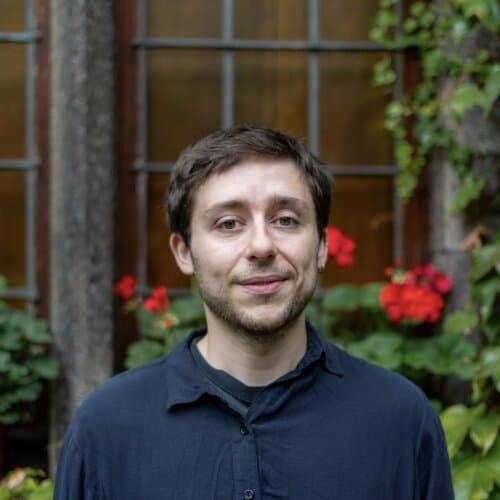
Radu Mareș (he/him) holds a BA (University of Bucharest) and an MSc (KU Leuven) in anthropology. During his studies, his research explored topics such as sensory labour in the coffee industry and socioecological transformations in a natural protected area in Romania. Within ReWorkChange, he will build on his broader interest in labour and the social and material transformations shaping everyday life, and is particularly excited to return to Romania to conduct fieldwork as part of a global comparative study.