
The Making of the Middle Class: Cricket, Remote Work, and the Production of Space in Gurugram
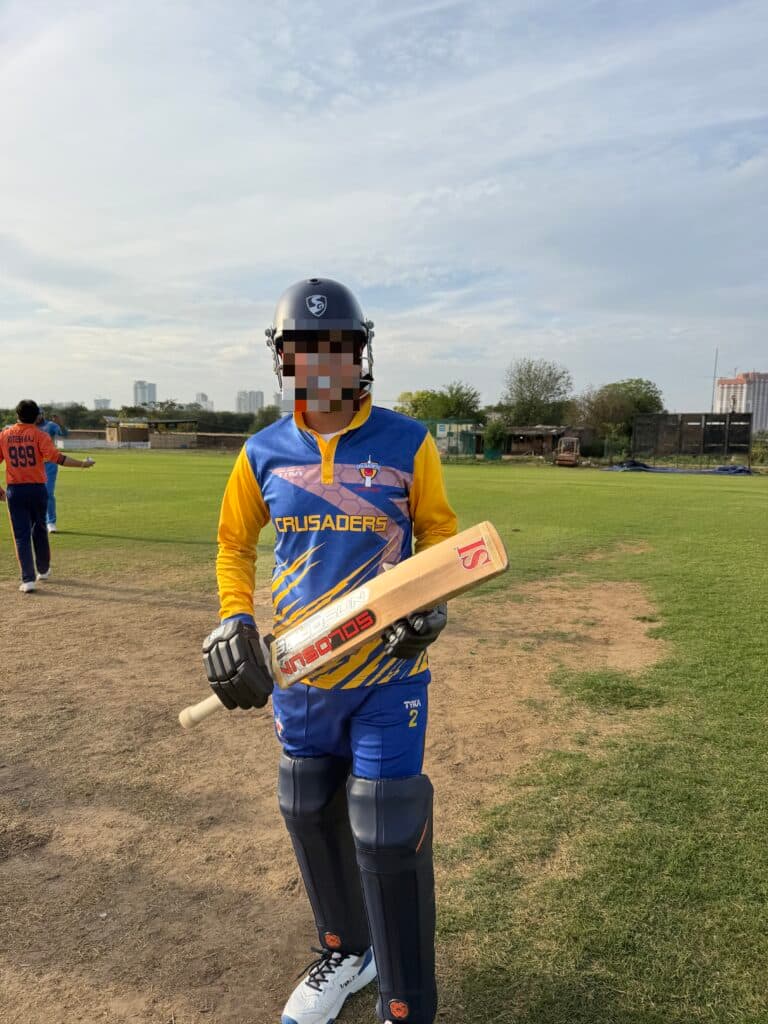
On a Sunday afternoon, I found myself standing at the edge of a cricket field near Kadarpur village in Gurugram. The city felt distant here, even though it was only a short drive from the Golf Course Extension Road. The ground was uneven in places, bordered by sparse trees, and beyond it, one could still glimpse fragments of Gurugram’s expanding skyline. Men in coordinated jerseys moved across the field, some stretching, others joking, while a few sat in the shade, checking their phones, smoking cigarettes before the game. One of the teams was called the “Crusaders”. "Interesting choice", I mumbled to myself. "Alas! The 'Crusaders' are not fighting wars anymore, not at least here and now."
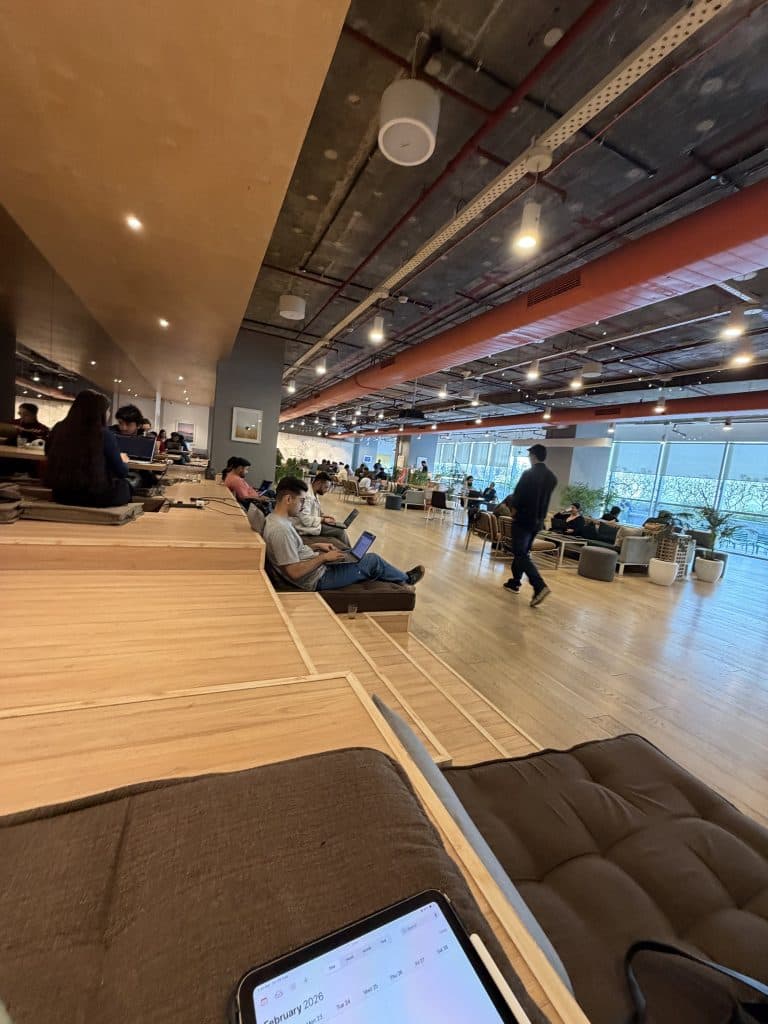
I had come here through Raghu, whom I had met earlier in a social setting. He invited me to join the match, suggesting that it would be a good place to meet other hybrid/remote workers. What struck me immediately was how different this space felt from the corporate towers and co-working offices I had been frequenting. Yet, as the visit unfolded, I realised that this field was not separate from that world. More or less, it was an extension of it, materially and socially continuous with it.
Most of the conversations I had that day happened in fragments. I spoke to people while they waited to bat, during breaks between overs, or while they stood in the field. I asked them about the most important value of remote work(ers). Surprisingly, Raghu and Nitesh both answered differently, yet similarly and almost with the same intensity, “If there is no trust, remote work cannot function”. The statement demonstrated the kind of values that structure their interactions and shared expectations.
At the same time, the playing field offered something that their everyday workspaces did not. There was a different kind of movement here. People laughed more freely, spoke in longer stretches, and shifted between Hindi and English without hesitation. Unlike the home/work setting, there was more free and consistent human interaction. Some of them had met through work, while others were connected through residential societies or shared networks. The game created a temporary space of sociality that was not entirely governed by corporate schedules, even though those schedules were always present in the background.
What became clearer to me, standing there, was how this scene participates in the production of a particular middle-class formation. This thought was partly shaped by my reading of Smriti Singh’s The Middle Class in Neo-Urban India (2024), which traces the relationship between the production of space and the middle class. As she notes, "Neo-urban spaces like Gurugram embody middle-class spatial identities, emerging from global capitalist flows interacting with local histories, producing distinct, classed socio-spatial transformations in contemporary India".
I started thinking about the playing field as a ground determined by social practices such as caste, gender, and class, accessed through invitation, networks, and being recognised as someone who belongs to [the] group. The jerseys, the equipment, the cars parked nearby, the hourly fees to play and the coordination required to gather on a Sunday afternoon all signal a certain capacity to organise time and resources.
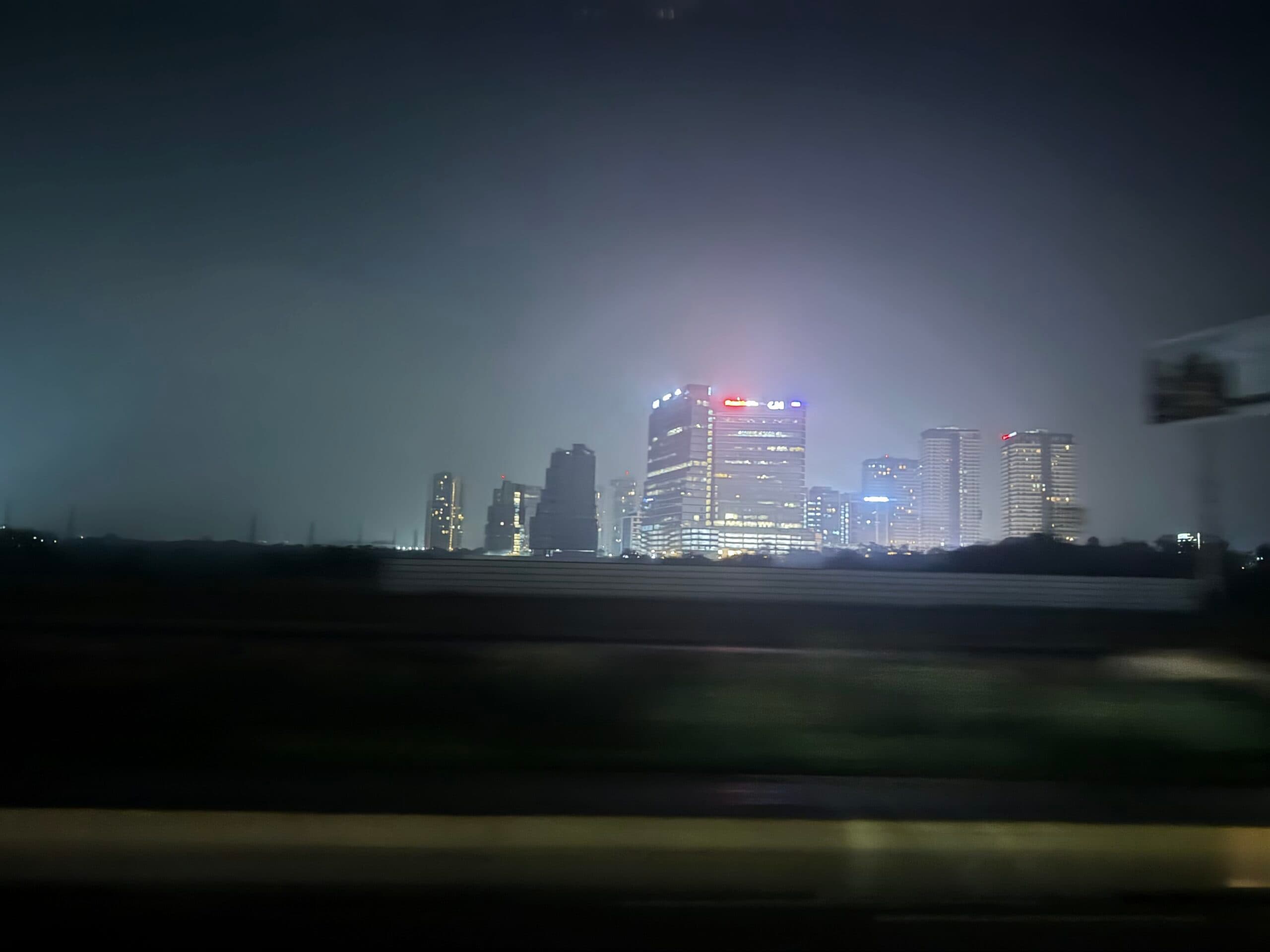
I began to think of this cricket field as part of the spatial life of remote work(ers). It was located at the edge of the city, in a semi-rural area that had not yet been fully absorbed into Gurugram’s corporate landscape. Yet it was actively used by people whose lives were shaped by that landscape. They arrived here in cars, carrying cricket kits, wearing jerseys that resembled corporate team uniforms. Standing there, watching the game unfold, it became evident that the production of middle-class life in Gurugram happens beyond offices or homes. It takes shape through these circulations, where work, leisure, and sociality remain entangled.
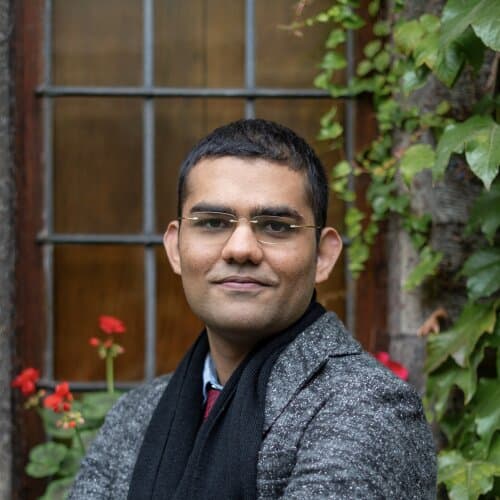
Hitesh (they/them/he/him) completed their MSc in Social and Cultural Anthropology from KU Leuven, Belgium and NTNU, Norway. Their anthropological interest lies at the intersection of science, technology, and socio-politics, with a particular focus on epistemologies and ontologies of [the] digital, exploring how humans engage with and are shaped by technological systems. They have conducted ethnographic research in India and EUrope. They will conduct their fieldwork in Delhi NCR/Gurugram. In their free time, they try to write poetry, do sports, and organise anti-colonial and anti-racist projects. You can learn more about their work at Post-Anthro-Apologist.