
Nobody Needs Anything from Me Here: Gender, Remote Work, and the Socialisation of Home
"It is 45 degrees outside!"
I exclaimed as I sat down across from Alisha in a café in Gurugram. It was one of those afternoons in May when the city felt almost impossible to inhabit. The heat radiated from the asphalt, the glass buildings amplified the temperature, and every movement outdoors felt like a negotiation with exhaustion. I continued complaining about the lack of trees, shade, and the growing dependence on air-conditioning that seemed to define urban life in North India.
Alisha and her friend Diya (another interlocuter whom I have interviewed several times before) both nodded to my complaint before responding.
"Yes, but what is the solution? We cannot do anything individually. It is a government issue."
I nodded in partial agreement before adding another complaint.
"One cannot even sit at home anymore because there is no regular electricity."
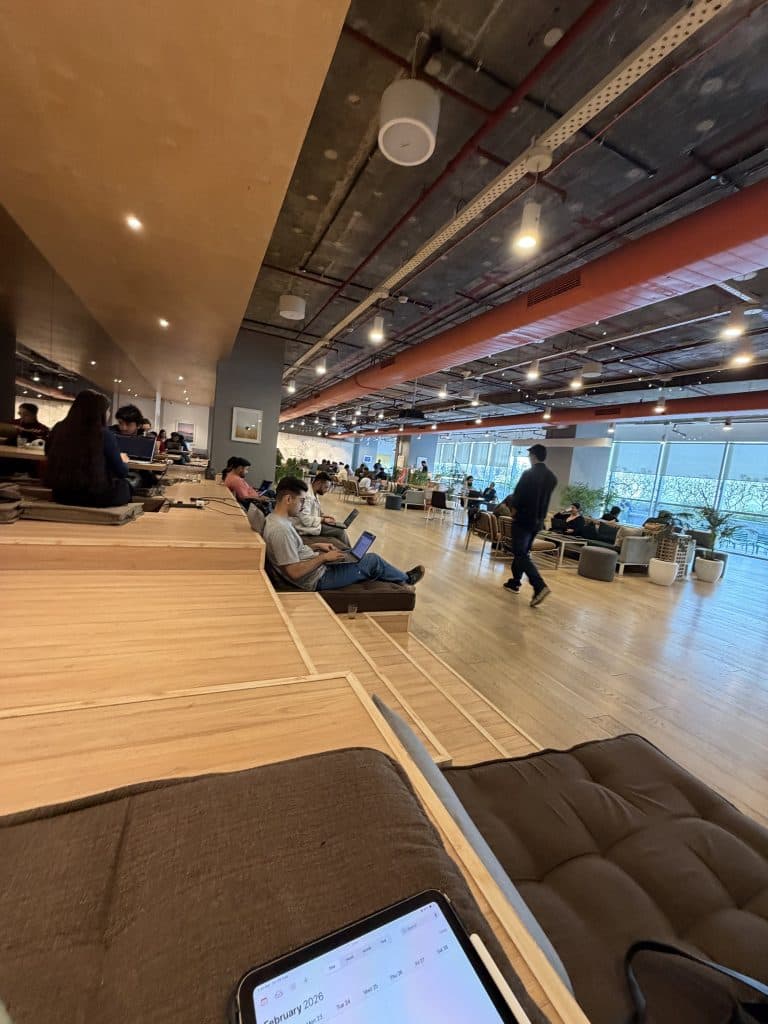
The previous week, in my area of Gurugram, I experienced seven power cuts in a single day, amounting to nearly six hours without electricity during peak working hours. Like many remote workers, Alisha had left home and relocated to a café. Because of the lack of stable Wi-Fi at home, she needs to work from ‘third spaces’. At first glance, the attraction of such spaces appears straightforward: stable electricity, internet access, air-conditioning, and coffee. Over the course of my fieldwork, I came to realise that these places offered something else as well. They offered temporary refuge from expectations.
This conversation would eventually lead me to think differently about gender, remote work, and socialisation. Here, socialisation can be understood as an ongoing process through which people learn how to navigate power, obligations, values, and expectations in everyday life. Gender, from this perspective, is both an epistemological and ontological process of socialisation that is continuously learned, negotiated, reproduced, and sometimes resisted.
Remote work provides a unique window into these processes because it collapses the spatial separation between home and work.
I met Alisha through Diya. Diya and Alisha were/are childhood friends. Both studied abroad, both returned to India, and both now work remotely from Gurugram. Yet despite these similarities, their experiences at home could not have been more different. For Alisha, home had become a site of continuous negotiation.
After completing her master's degree in Melbourne, she returned to Gurugram and invested her savings into digitising her family's jewellery business. She now lives in a fourteen-member joint-family household consisting of parents, grandparents, uncles, aunts, cousins, and a newborn nephew.
When I asked her to describe a typical workday, she smiled before answering.
“I wake up at five in the morning because that's the only time I get peace.”
“Five in the morning?” I asked.
“I have to. That's the only time I get completely alone time. Nobody bothers me. Nobody needs anything from me. That's when I do my best work.”
The significance of waking early had little to do with productivity techniques, but it had everything to do with creating a temporary distance from the social demands of family life.
By eleven o'clock, she explained, the house transforms.
“Everybody is up. Everyone is getting ready to go to the shop, people are moving around, and guests are coming. Something is always happening. That's when all the chaos starts.”
Listening to her, I began to realise that remote work was revealing something much larger than work itself. In remote work settings, she was constantly interrupted by her family. Such regular interruptions were also the moments through which gendered expectations were reproduced.
The issue was rarely overt opposition. Nobody explicitly told Alisha that her work was less valuable. Instead, the challenge emerged through the accumulation of small expectations.
“They expect me to help with things at home. They expect me to build this business. They expect me to get married. They expect me to do everything”
Then she grinned and rhetorically asked, “But when exactly am I supposed to do, all of that?”
These expectations attached themselves to her simply because she was physically present within the home.
“It's like they think, 'Well, you're here anyway. What else are you doing?”
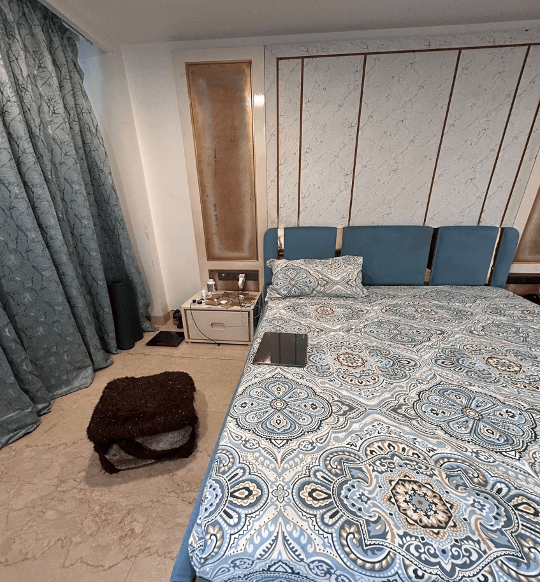
This perhaps captures one of the central paradoxes of remote work. Work conducted on a laptop inside a bedroom often becomes invisible. Because it does not resemble “Conventional labour”, it remains vulnerable to interruptions for women. This is where socialisation becomes important. Gendered expectations are reproduced in countless everyday interactions that teach people what forms of behaviour are expected, tolerated, rewarded, or criticised. In the case of Alisha, socialisation happens through obligations, interruptions, jokes, silences, and assumptions.
When I asked what home meant to her, she paused for a long time.
“Maybe home is where I can feel myself. Where I feel free!”
“And this house?” I asked.
She hesitated.
“Australia was more of a home than this.”
For Alisha, Australia represented something larger than a geographical location. It symbolised autonomy, privacy, and the possibility of existing without the constant negotiation of her agency in her own home.
“No one enters without permission in my room”, she said and continued, “Family members jokingly call it Australia.”
"A visa is required," Both Diya and Alisha laughed lightly.
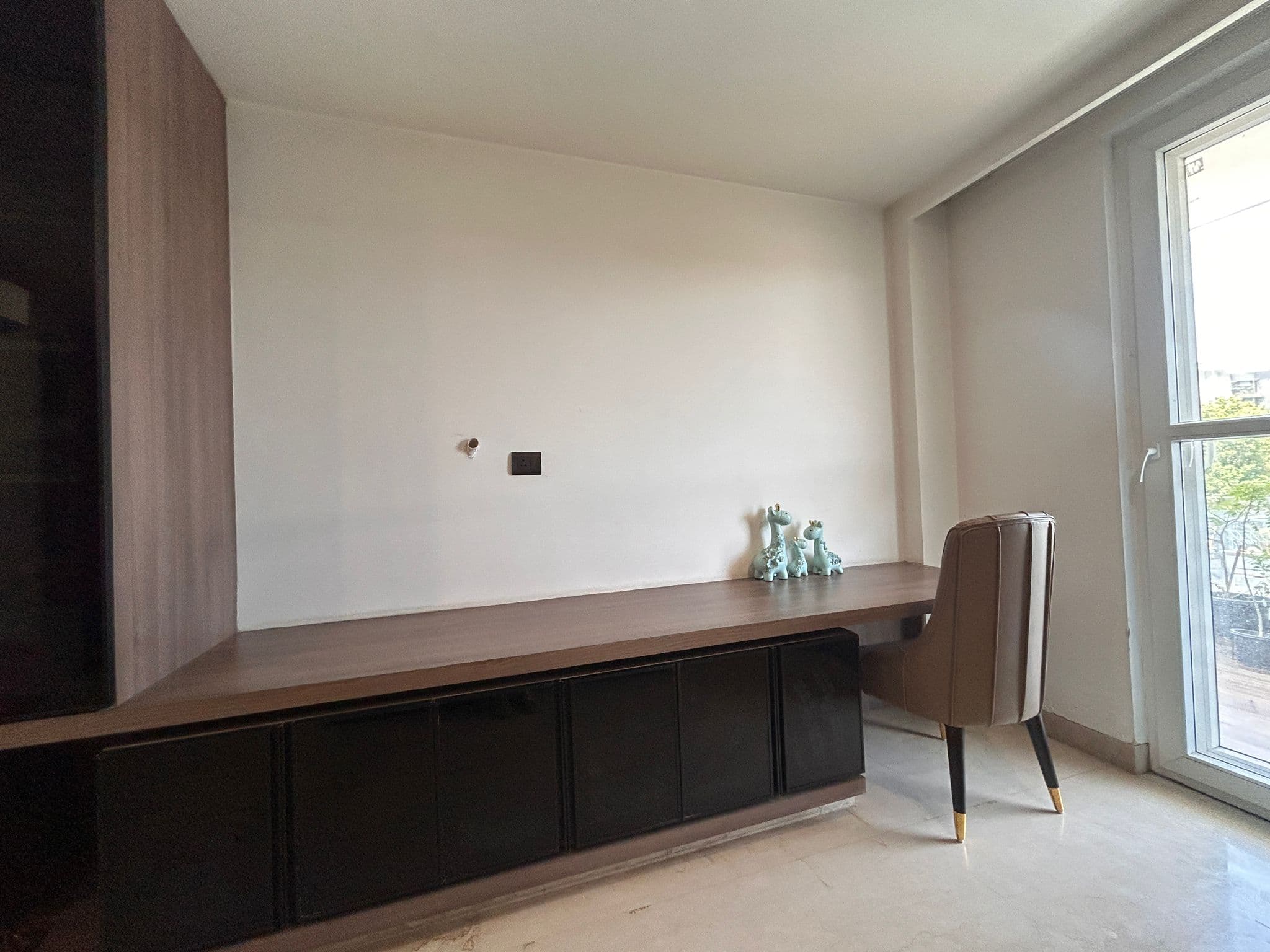
It was evident that within a large joint-family household, her room functions as a miniature territory carved out from collective life. Her desk was positioned against the wall, the carefully organised workspace, and the door that remains closed acts as a technology of autonomy.
“Sometimes I don't answer when they knock”, she said
“Why?” I asked with curiosity.
“Because if I answer, they will keep asking things.”
As the afternoon turned into evening, we returned to the topic of cafés. Looking around at the dozens of people working on laptops, I asked why she had started spending so much time in places like this.
“Nobody needs anything from me here”
For a moment, the statement seemed to summarise everything we had discussed throughout the day. For her, the attraction of third spaces had become a temporary suspension of social expectations. Unlike home, these spaces demand very little beyond the purchase of a coffee and the class performance of belonging. Remote work, therefore, has changed where people work, but also, it has transformed the conditions under which expectations become visible. By bringing work into the home, remote work exposes the everyday processes through which gendered obligations were negotiated and reproduced.
In this sense, the significance of remote work in Alisha's life could be understood through kinship, gender, care, obligation, and the everyday politics of expectations. As a remote worker, her everyday struggle includes a way to carve out a space in which her work, her ambitions, and ultimately her sense of self could exist without constant negotiation and long-term obligation of being both "a daughter/wife/mother/woman” and “ a worker” at home.

Hitesh (they/them/he/him) completed their MSc in Social and Cultural Anthropology from KU Leuven, Belgium and NTNU, Norway. Their anthropological interest lies at the intersection of science, technology, and socio-politics, with a particular focus on epistemologies and ontologies of [the] digital, exploring how humans engage with and are shaped by technological systems. They have conducted ethnographic research in India and EUrope. They will conduct their fieldwork in Delhi NCR/Gurugram. In their free time, they try to write poetry, do sports, and organise anti-colonial and anti-racist projects. You can learn more about their work at Post-Anthro-Apologist.