
Notes from a “Good Society”: The House I Only Saw on Paper
Good Society
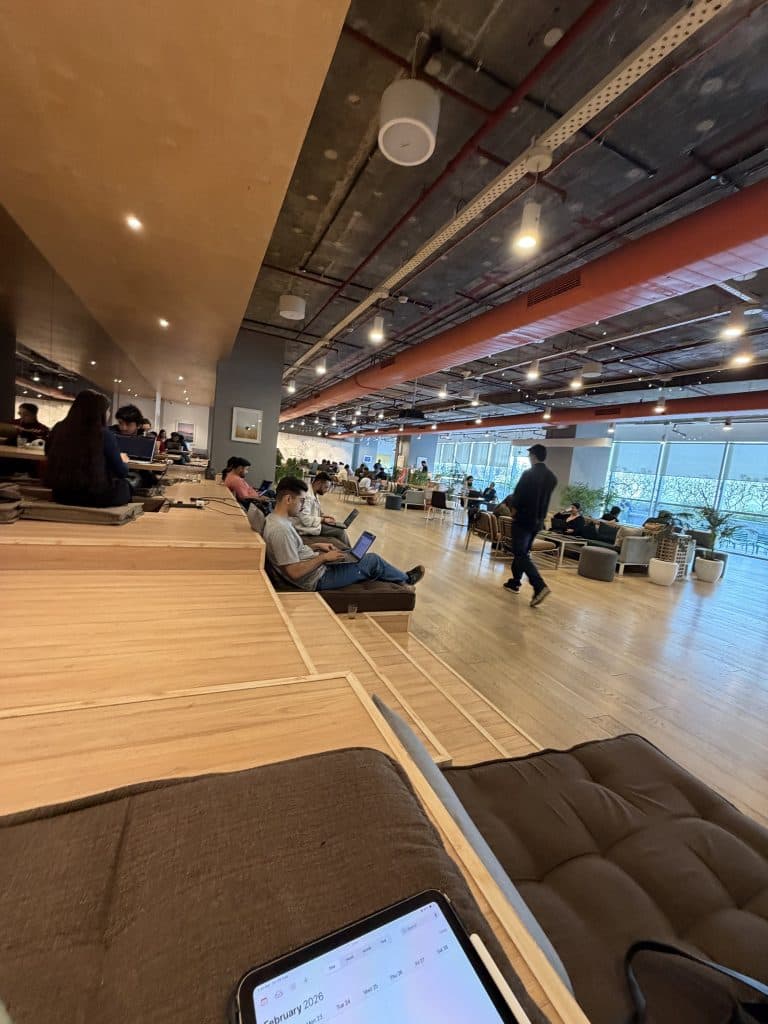
I would like to say that I played badminton almost every morning for months, but that would be an exaggeration. I can say I became a familiar face among the residents who come to play Badminton in my “society”. The word "society" is used by people in Gurugram, as across much of urban India, for a residential complex. The term comes from the cooperative housing societies through which many such apartment blocks were once built and managed, but in everyday speech it now refers to almost any gated group of towers or flats. Among the residents were remote and hybrid workers who lived just a few floors away from me. We met on the badminton court, talked between rallies, sometimes swam afterwards, and occasionally spent another hour discussing work, families, or whatever else came up. I knew something about their lives, but for a long time I had no idea what their living rooms looked like. It took me some time to realise that knowing someone, meeting them regularly, and being invited into their house were three quite different things. From both research and my own experience, this is quite different from, let’s say, rural India, where hospitality norms are not as Europeanised and (post-)colonial as they are in Gurugram (Srinivas 1976; Singh 2024; Waldman 2025).
I lived in what people in Gurugram commonly call a “good society”. What does that mean? Perhaps a gated residential compound with a clubhouse, badminton, squash and tennis courts, swimming pools, and landscaped gardens. I began inviting interlocutors to my flat, sometimes to cook together, sometimes for dinner, and occasionally without any particular reason. I also hosted a poetry evening. What interested me was that many of these neighbours maintained friendships elsewhere in the city, often with people living in other residential societies. The geographical closeness of our houses had very little to do with how closely our social lives were connected. More on that some other time.
Two Ways In
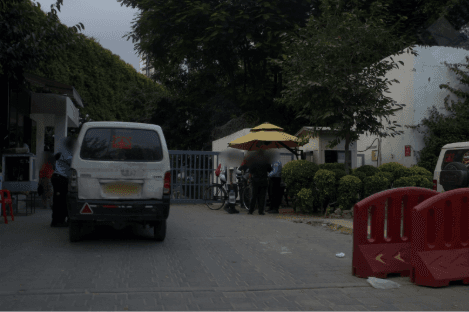
Another aspect of living in the “society” that caught my attention was the presence of different gates. For most of my stay, I entered through the main gate, which was organised around residents, their cars, and visitors. However, I quickly began to observe the service gate more closely. A yellow umbrella shaded the security guards beneath coils of razor wire. Red plastic barriers narrowed the passage, while domestic workers, drivers, cleaners, and delivery riders waited to be allowed inside through “My Gate App”, which manages entry into many gated societies in Indian cities.
At the gate, a guard enters the visitor’s details and the flat they are going to, and the resident receives a phone notification to approve or deny entry. Delivery riders are logged in the same way, and residents can ask them to leave a parcel at the gate. Domestic workers who come every day are given a code that the guard enters in the app, and the household is notified on their phones when they arrive. Residents, in other words, decide from inside, in the comfort of their flats, who comes through the gate, while those waiting outside often wait for a reply from upstairs.
Much of the cooking and cleaning services that residents described as part of their homes arrived through this gate. “The Society” sorted people by what they came to do and gave each a different way in. The two gates also marked different kinds of relationships people had with the residential compound. Residents, visitors, and workers shared the same physical space, though their movements were organised differently. If the gate regulated who could enter the compound, the front door marked another threshold, one that I found considerably harder to cross. Interestingly, some of the most detailed accounts of houses I gathered that month came from people whose houses I had never visited.
A drawing of movement
One of them was Jogi, a young entrepreneur who works remotely and whom I had first met at a café near Galleria Market, where he spends most evenings. I had never been to his house. When I asked to do the interview at his home, he said he didn't want to because a home is a rather personal space. “Also…it’s not that…” he added more explanations, and I kept nodding in agreement without flinching, even though I wasn't very satisfied with his answers. We did not pursue the matter further. Instead, one day, over lunch, he began describing his house, moving from one room to another, before eventually drawing its layout in his notebook. I gave him my I-pad, but he prefered a “real book”. This conversation revealed how different members of the same household occupied, shared, and negotiated space. I was beginning to notice similar questions at different scales, from the organisation of movement through the residential compound to the everyday arrangements within individual houses.
When I asked Jogi to describe his “big house”, he first laughed off my guess that he might live in a mansion. “I am poor, bro,” he said, as every company owner does. Then he settled on a plainer answer: “It’s a 3BHK (3 Bedrooms, 1 Hall, and 1 Kitchen), a good-size 3BHK, that’s all I know.” The family, i.e., his mother, grandmother, him and his brother, owns the first floor of a builder floor inside a gated society, with other households on the floors above and below. I tried to get him to draw it on a tablet, and he gave up almost at once. “This is actually terrible technology,” he said. “I need my pen and paper.” The drawing came together on a notebook page between plates of food.
He shares a room with his younger brother. His grandfather was a lohār (लोहार), a blacksmith who also worked as a carpenter, and Jogi called him “an artist”. “That table means a lot,” he said, and he explained that it could not stand anywhere else: “the way that table is made, the way the room is laid out.” When his brother works from the room, he uses the same table or sits on the bed with a bed table Jogi built himself, “literally two pieces of wood” with a couple of compartments. The washroom adjoining their bedroom once had a door leading into the living area, but someone had closed it off. The two brothers had since more or less claimed the washroom as their own.
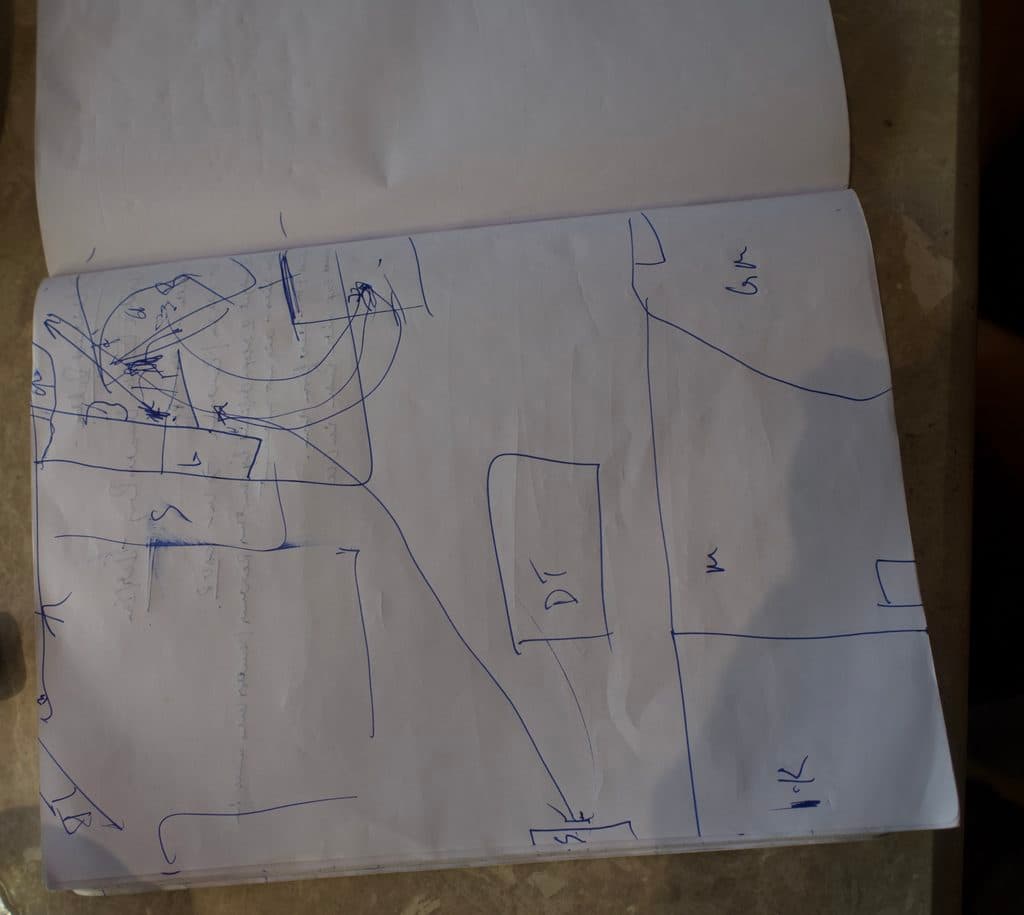
When I asked him to walk me through his movements from the moment he wakes up, he first resisted. “I don’t think this much,” he said, and then, “bro...this is too much work.” I gave a grinning smile and made an almost apologetic face, knowing it was too much to ask, but then he began. “Let me think... I wake up, I’m in bed for like 30 to 40 minutes, go to the washroom and then come back … and then sit here.” The first hour has to be his own: “I need one hour of empty time by myself to get up and running... you know?” The next stretch at the table goes to the tasks he dislikes most, replying to emails and texting people, because “later in the day I do not have the energy.” His mother is up early in the kitchen. “I just met her and then had a good morning,” he said. They don't have morning tea together. When I asked why he keeps his pre-workout things in his room and not in the kitchen, he said, “It’s nice to have your own space to do things … it’s a lot of interaction in the kitchen… and I do not like that in the morning”.
I asked him about the sofas and the television, since in many “Indian” households the living room becomes a place of work. He thought it suited people who like being among others. “My family sometimes sits there; they sit there more often than I do, but I only interact there about twice a week. Otherwise, it’s just the kitchen or my room.” His grandmother might be knitting there, and his mother might be cutting vegetables, part of the house’s background. Late in the conversation, I asked what the house smells like. He paused, then said, “...it doesn’t smell like a home; it smells like being honest … it smells like a transient sort of … not a hotel, but it doesn’t smell like it’s a fully functioning home.”
Leaving the good society
At the end of September, I moved to a smaller house near Galleria Market, close to the cafés where I met Jogi and many of my other interlocutors to go beyond interviews and build “thick description”. Changing my address changed who I was likely to bump into, which cafés I could walk to, and which relationships were easy to keep up with.
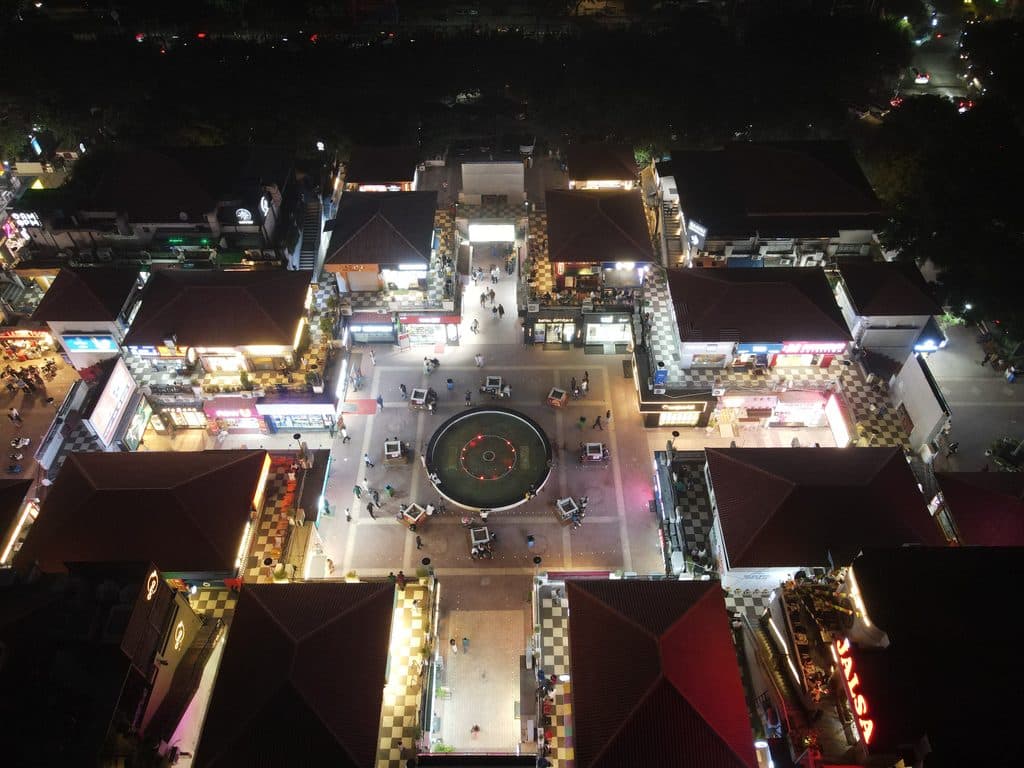
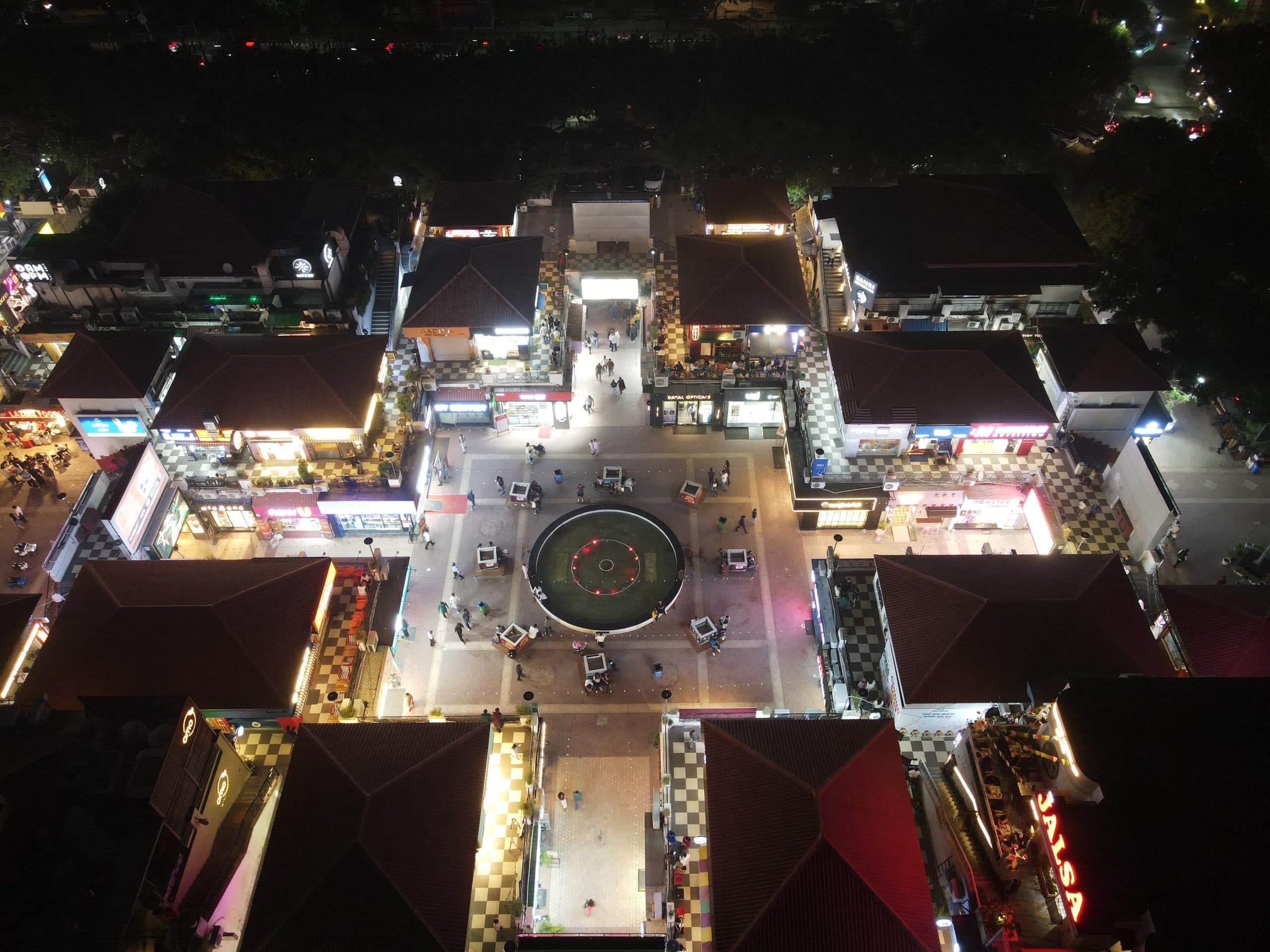
From above, the market is full of people meeting and passing through. You can see friends gathered at tables outside the cafés, small groups circling the fountain, others crossing the square on their way somewhere else. Many of my interlocutors live in the houses around the market, some in gated towers like the one I left, and many come from other parts of the city. The photograph brings them all together in a single illuminated courtyard and, in doing so, flattens their differences. It cannot show who knows whom, which encounters will be repeated, or whose door each will go home to. Living here, I hope to follow some of these meetings back into the houses where they begin and end, and to learn which relationships the Galleria market (also a one-of-a-kind space in Gurugram) makes possible that the gated compound did not. Again, more on this some other time.
References
Srinivas, M. N. 1976. The Remembered Village. Berkeley: University of California Press.
Singh, S. 2024. The Middle Class in Neo-Urban India: Space, Class and Distinction. Routledge India.
Waldman, Devra. 2025. “Selling Spectacular Spaces: Hybridized Sport and Space in the Imagination of Enclaved Residential Living in India.” Cultural Studies, Critical Methodologies 25 (2): 101–113.

Hitesh (they/them/he/him) completed their MSc in Social and Cultural Anthropology from KU Leuven, Belgium and NTNU, Norway. Their anthropological interest lies at the intersection of science, technology, and socio-politics, with a particular focus on epistemologies and ontologies of [the] digital, exploring how humans engage with and are shaped by technological systems. They have conducted ethnographic research in India and EUrope. They will conduct their fieldwork in Delhi NCR/Gurugram. In their free time, they try to write poetry, do sports, and organise anti-colonial and anti-racist projects. You can learn more about their work at Post-Anthro-Apologist.