
Remote Work in the Margins: Early Observations from Esenyurt, Istanbul
In Turkiye, remote work is often associated with coworking spaces in Şişli, freelancers working from cafés in Kadıköy, and startup incubators in Beşiktaş. Then why choose Esenyurt, a densely populated working-class neighbourhood on the outskirts of Istanbul, to conduct fieldwork on remote work?
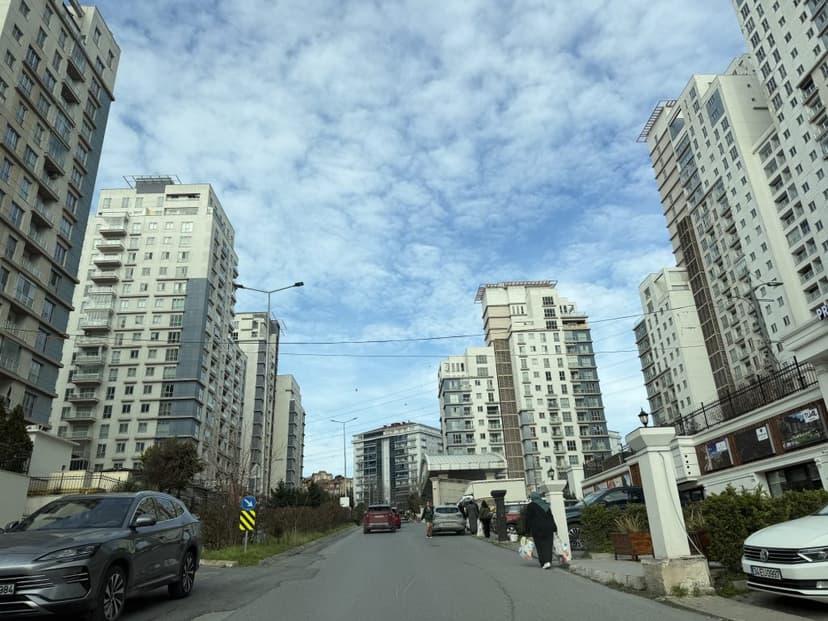
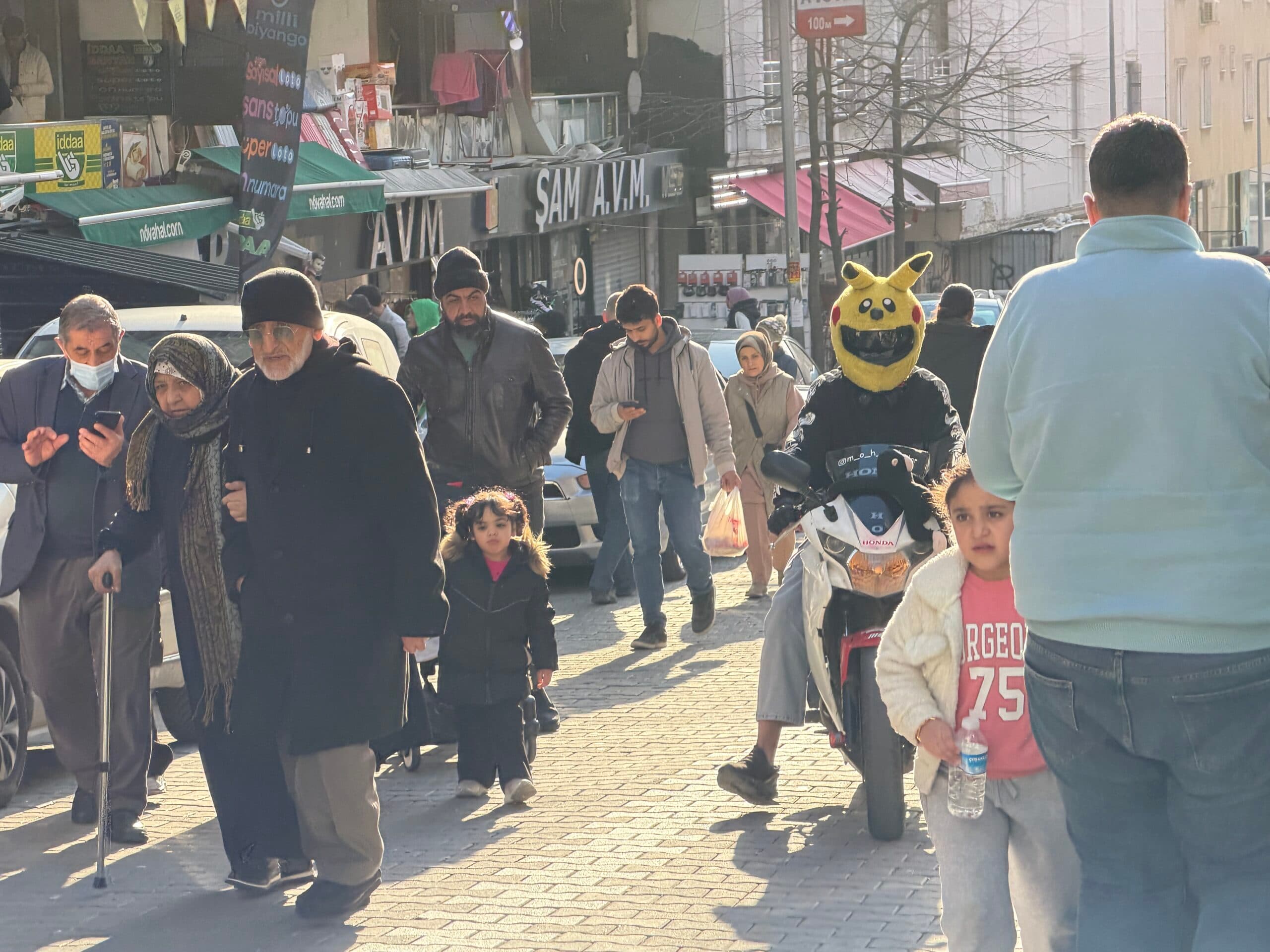
For my first encounter with Esenyurt, I travelled all the way to the last stop on the metro, the westernmost point of Istanbul, and then continued with a short minibus ride to Esenyurt. When I first arrived, what struck me most was the noise. This first observation proved to be accurate: Esenyurt never really quiets down. Early morning construction sounds, crowds filling the squares at midday, and the constant buzz of shops in the evening. Everything overlaps, layered on top of each other, continuously.
Esenyurt is one of the most densely populated districts of Istanbul, home to around a million people. Its population is shaped by migration from Türkiye and beyond, bringing together Kurdish, Turkish, Syrian, Russian, and Iranian residents, among others, in everyday proximity. And right in the middle of this density, one begins to notice a rare rupture.
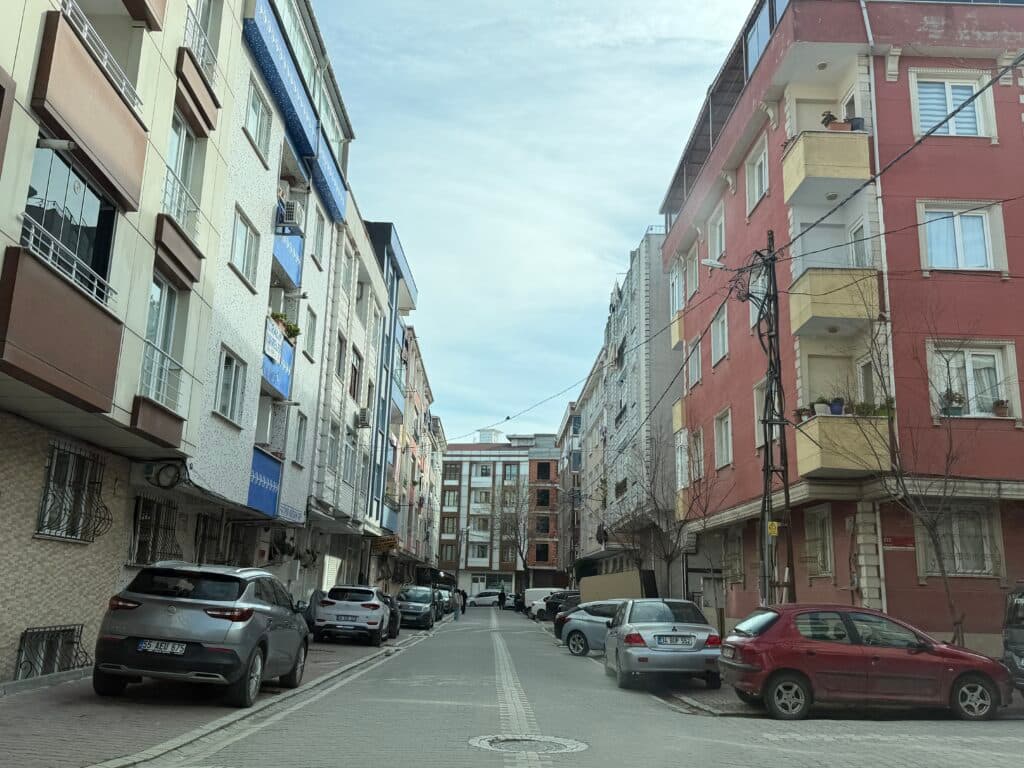
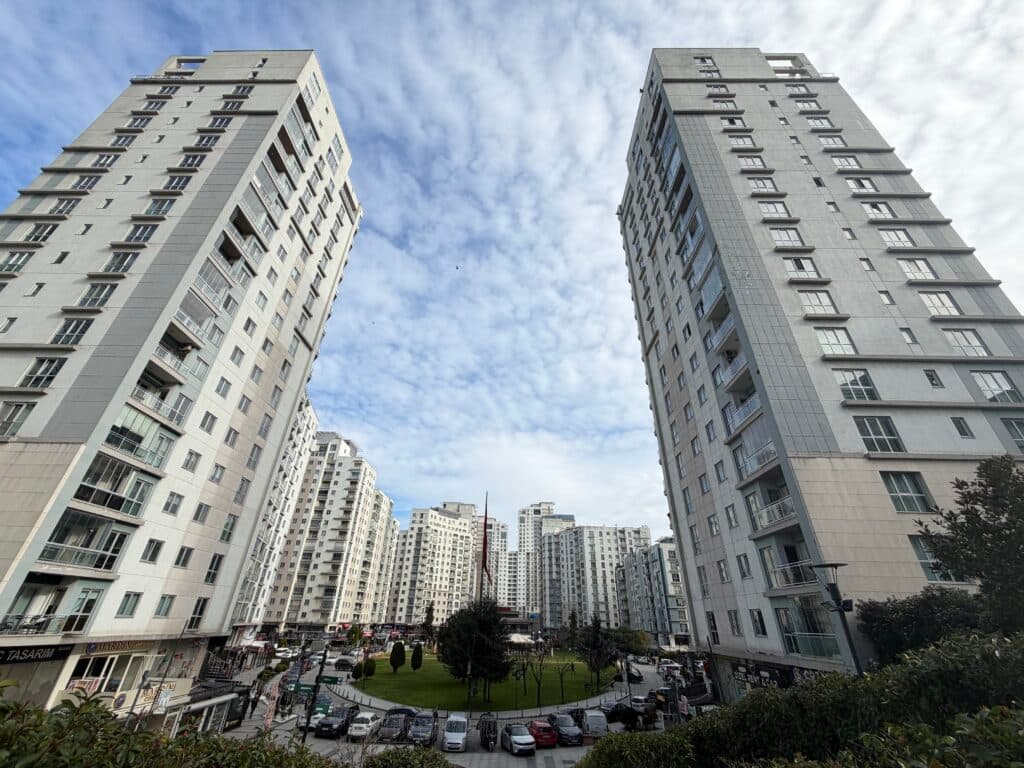
Esenyurt is divided into two. On one side are the new apartment buildings constructed by TOKİ (Housing Development Administration of Türkiye) in a seemingly never-ending succession of residential blocks that look almost identical, as if produced from the same template, with symmetrical balconies and grey-white facades. On the other side is old Esenyurt: low-rise, ageing buildings leaning into each other, balconies added over time, and narrow streets in between.
Two worlds within the same district. And in both, something remains invisible from the outside: people working inside homes, behind closed doors.
My research focuses on digital work, but Esenyurt quickly made one thing clear: remote work here does not look like what I was used to. In the first few weeks, I visited cafés where hardly anyone was working on a laptop. Companies mainly used the two co-working spaces I found. The library was full of students.
At one point, I began to think that Esenyurt’s relationship with remote work was quite limited. I was wrong, but only partially.
Remote work was present, but not immediately visible. It unfolded within homes, behind closed doors, woven into the flows of everyday life. This realisation reshaped my fieldwork: lawyers review court files in their living rooms, pollsters and content moderators work from bedrooms shared with family members, content creators and online journalists document the neighbourhood through their phone cameras and edit later at the dinner table.
In Esenyurt, remote work did not emerge as a lifestyle choice. People were already here, to stay close to family, to live more economically, to maintain existing routines. Remote work was something added later onto this “system”, adapting to it rather than defining it. And that is precisely why Esenyurt is the right place to research remote work.
Being in the field always reveals unexpected things. Esenyurt taught me this from day one: if I want to ask the right questions for my research, I first need to listen to this neighbourhood, its voices, its noise, its crowds of a million people. And within that crowd, the stories of people sitting quietly in front of their computers.
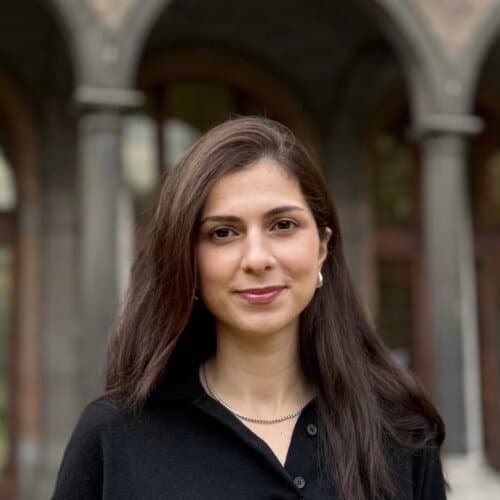
Elif Hazal Gougler (she/her) is an anthropologist and project manager from Istanbul. She studied Management of Performing Arts at Istanbul Bilgi University and later completed a joint MA program in Social Anthropology at the University of Bern and the University of Vienna. With professional experience in documentary production for international media networks and in EU research coordination at Kadıköy Municipality, her work explores mass communication and digital media, focusing on how media are created and adapted for specific communities, particularly women. In the ReWorkChange project, Elif Hazal will carry out ethnographic research in Istanbul, Türkiye.