
“We Have to Have the Children Next to Us”: Making Work Possible at Home
One person I met during my fieldwork in Bucharest is Alina (a pseudonym), a woman in her forties who has worked largely from home for most of her adult working life. In her case, remote work long predates the pandemic. Her working life took this form because one of her children has a severe disability and requires extensive care, regular therapies, and almost permanent supervision. In the years after her daughter was born, Alina remembers her life as being organised around “therapy, recovery and keeping her alive.” For a period, she stopped working altogether. When she began earning again, the work had to allow her to remain close to her daughter.
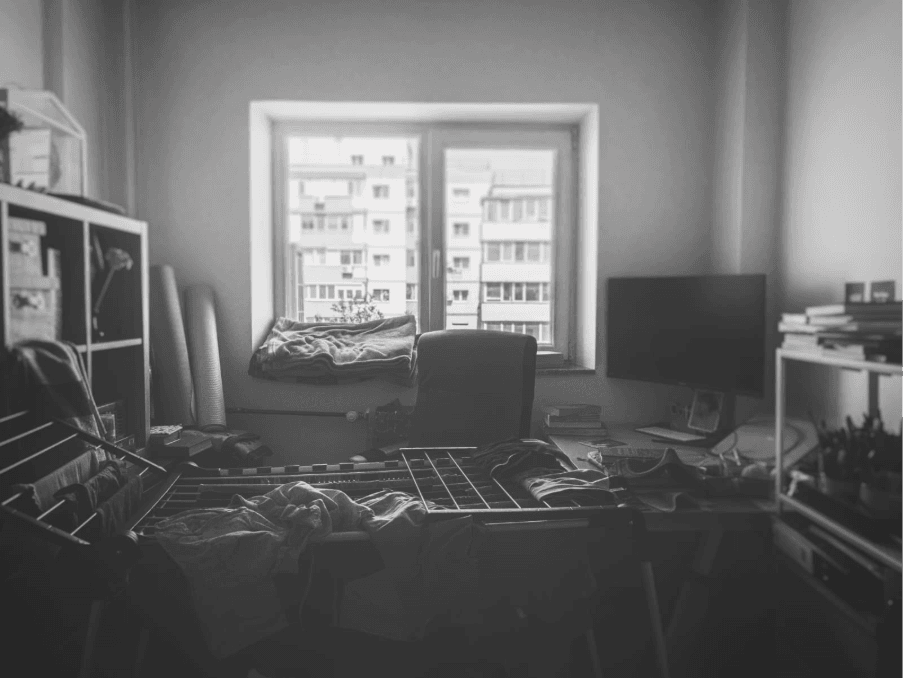
She started a small business from home. One room in the apartment gradually became its workspace, while she and her husband divided the work of running it and caring for their children between them. The business grew for several years until the obvious next step would have been to move it into separate premises. They could not really afford this, since a large part of what they earned wenttowards therapies, but the larger problem was that moving the business would also have meant moving her working day away from the children. They had no relatives regularly sharing the care. “We had to have the children next to us all the time,” she recalled. Eventually the business stopped, and Alina moved into other forms of work that could once again be done mostly from home: writing, project work, consultancy and, later, disability advocacy and support.
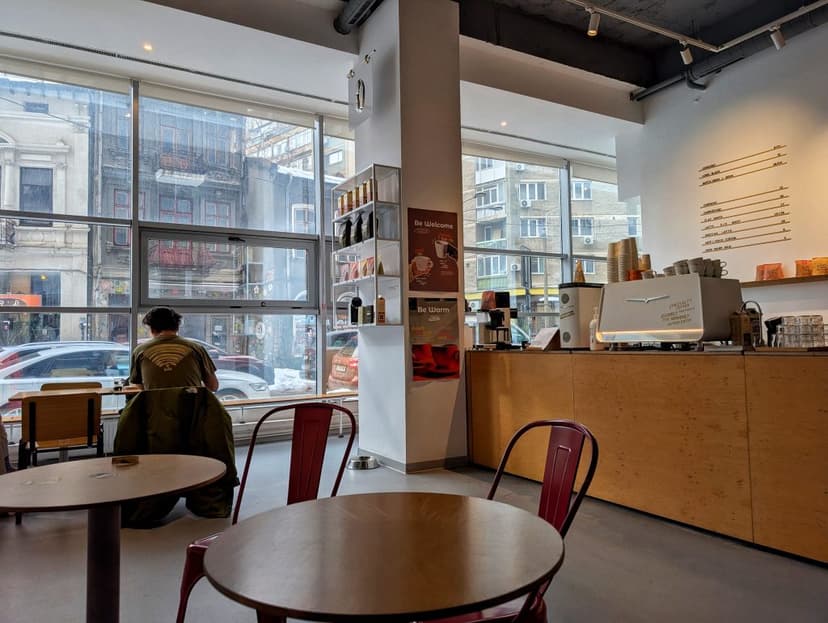
Working from home was therefore the first durable form that paid work could take in Alina’s life. Yet she does not describe the home simply as the place where care obligations have confined her. By now, it is also where she prefers to work. When she writes or has to put ideas together, she often works from the bedroom, sometimes from bed. She wants her own things around her and says that, for this kind of work, she needs “a very safe space.” She finds it difficult to concentrate in coworking spaces or cafés and describes herself as a private person and a homebody.
Necessity and preference now sit side by side in ways that are difficult to disentangle. The possibility of working from home first allowed Alina to remain in paid work while providing care. Over time, home also became the environment in which she felt most comfortable working. Her experience already complicates the idea of flexibility as a property of an individual job. Whether work is flexible enough depends not only on where or when it can be done, but on how paid work and care are organised across the household.
There was, however, one significant period when Alina worked outside the home every day. For around ten months, she had a full-time job in a large organisation while continuing some of her other work on the side. Initially, she liked it. The organisation worked in an area she believed in, and she also liked the idea of going to an office. The experience eventually became “very ugly,” but not because she simply discovered that office work did not suit her.
Alina continued with her own organisation and occasional external projects, fitting this work into the early morning before taking her daughter to school and going to the office, sometimes starting at five or six. The workplace itself also became increasingly difficult;with a management culture she experienced as toxic and distressing. She stayed for around ten months because, as she remembers it, “the money was good,” but eventually the arrangement made her ill. She describes arriving home at five completely exhausted and remembering almost nothing from those evenings. It took her a long time afterwards to feel that she had recovered.
The episode makes her present preference for home difficult to reduce either to care obligations or to a simple dislike of office work. Going to the office had, at least initially, appealed to her. It was also possible only because her husband’s remote work shifted much of the daytime care onto him, while her other paid and unpaid work was pushed towards the edges of the day. What eventually made the arrangement intolerable was the combination of the job conditions, the workplace atmosphere, and the overall amount of work she was doing.
Her other jobs have involved a similar mixture of possibilities and restrictions. Some of the work she values most is connected to disability and accessibility and has become personally important to her, but meaningfulness and financial security have not always coincided. There have been periods in which she did substantial work without being able to pay herself regularly, alongside consultancy that paid better but sometimes involved organisations whose commitment to accessibility she distrusted. Financial pressure could mean accepting work she did not particularly want or taking on projects when she was already exhausted. Greater household security has recently allowed her to become more selective. When I asked whether she now felt she had more control over her work, she agreed, then added, “I earn less.”
For many years, her husband’s employment formed part of the same arrangement. He deliberately sought remote and hybrid jobs, meaning that another adult was often present in the house during the day. Their two jobs could not really be understood independently of one another. His ability to work from home made some paid work possible for Alina because they could share care during the day. In other words, the characteristics of one person’s job altered the possibilities available to the other.
More recently, her husband took an office job. It is below the level of seniority he might otherwise work at and does not pay an especially high salary, but it has one quality their previous combination of project-based work did not have: the money arrives reliably each month. This financial predictability has reduced some of the pressure on Alina to accept every available project and has given her more room to choose the work she wants to do.
At the same time, his office job has removed one of the people who used to be available in the house during the day. The same arrangement that has made Alina’s paid work less financially necessary has therefore made care more difficult to share. She described herself as very tied to the house at the moment. Her life, she said, “theoretically starts after six,” when her husband gets home, although by then she is often exhausted.
It is tempting to describe Alina’s situation as a trade-off between flexibility and security, but the two are more closely entangled than that. Her husband’s less flexible job has brought a regular salary into the household and, with it, greater freedom for Alina to refuse projects she does not want. At the same time, his absence during the day has reduced her freedom to leave the house. Her flexible work lets her stay available to her daughter and organise her time around the changing demands of care, but it can also mean irregular income and fewer opportunities. Periods in which she can devote more time to work she finds meaningful may also be periods in which she earns less.
What counts as a good job for Alina, therefore, cannot be understood through salary, flexibility, or meaningfulness considered separately. A job that appears flexible for one member of the household may depend on another person being available to absorb care. A more secure job may increase financial freedom while reducing practical freedom elsewhere. The qualities of a job are, in this sense, relational: they depend partly on what other members of the household are doing, who can be at home, how much income can be relied upon and whether someone remains available to provide the care their daughter needs. Alina’s and her husband’s working lives, like their caring lives, have developed through continual adjustments to one another.
Towards the end of our conversation, Alina began mentioning other parents she knew whose working lives had developed under similar conditions: translators working from home while caring for children with severe disabilities, an accountant working from a laptop while waiting through her child’s therapy, parents answering emails or dealing with clients from hospital rooms. These examples do not make their experiences identical to Alina’s, but they make clearer what is distinctive about the starting point from which many of them make decisions about work. Questions about pay, security, meaningfulness, colleagues, career progression, and flexibility remain important. Before any of these can be negotiated, however, the job must be compatible with the ongoing presence of care.
For some parents caring for children with severe disabilities, the alternative to remote work may not be going to the office. It may be unable to remain in paid work at all. But the necessity does not make the other questions about work disappear. Within that limit, people still work out what kind of work is meaningful, secure or bearable, and what kind of life it allows them to sustain. Alina’s case shows how much complexity can sit inside something as simple as “remote work” once we look at how work becomes part of a life rather than a job arrangement on its own.

Radu Mareș (he/him) holds a BA (University of Bucharest) and an MSc (KU Leuven) in anthropology. During his studies, his research explored topics such as sensory labour in the coffee industry and socioecological transformations in a natural protected area in Romania. Within ReWorkChange, he will build on his broader interest in labour and the social and material transformations shaping everyday life, and is particularly excited to return to Romania to conduct fieldwork as part of a global comparative study.