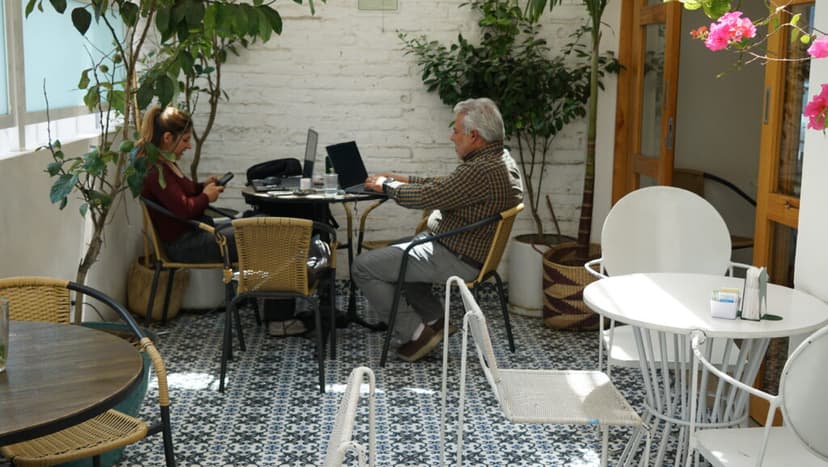

Between Breastfeeding, Remote Working and Relocating: An Ethnographic Case Study in Mexico City
I met Rosa one Sunday afternoon in the beautiful Chapultepec Woods in the north of Mexico City. She was sitting with her daughter and her daughter’s father, surrounded by lush greenery. They seemed relaxed, laughing and enjoying the tranquil afternoon. “It’s sublime,” I thought. I approached her to ask if I could take a photo of her. One thing led to another, and Rosa and I started spending time together. However, my image of the perfect family soon faded as I learned more about her life.
Rosa worked as a clinical psychologist at a hospital in southern Coyoacán until she became pregnant with little Clara two years ago. Having recently separated from her partner, she could no longer afford the cost of renting an office at the hospital - a common practice in the private medical sector, so she moved back to the outskirts of the city, to the pueblo of Santa Fe, to live with her father. She subsequently began offering online therapy sessions to her clients. By the time we met, I was already conducting research in Coyoacán, focusing in part on the high mobility of workers moving in and out of the neighbourhood, making Rosa’s story particularly resonant with my research.
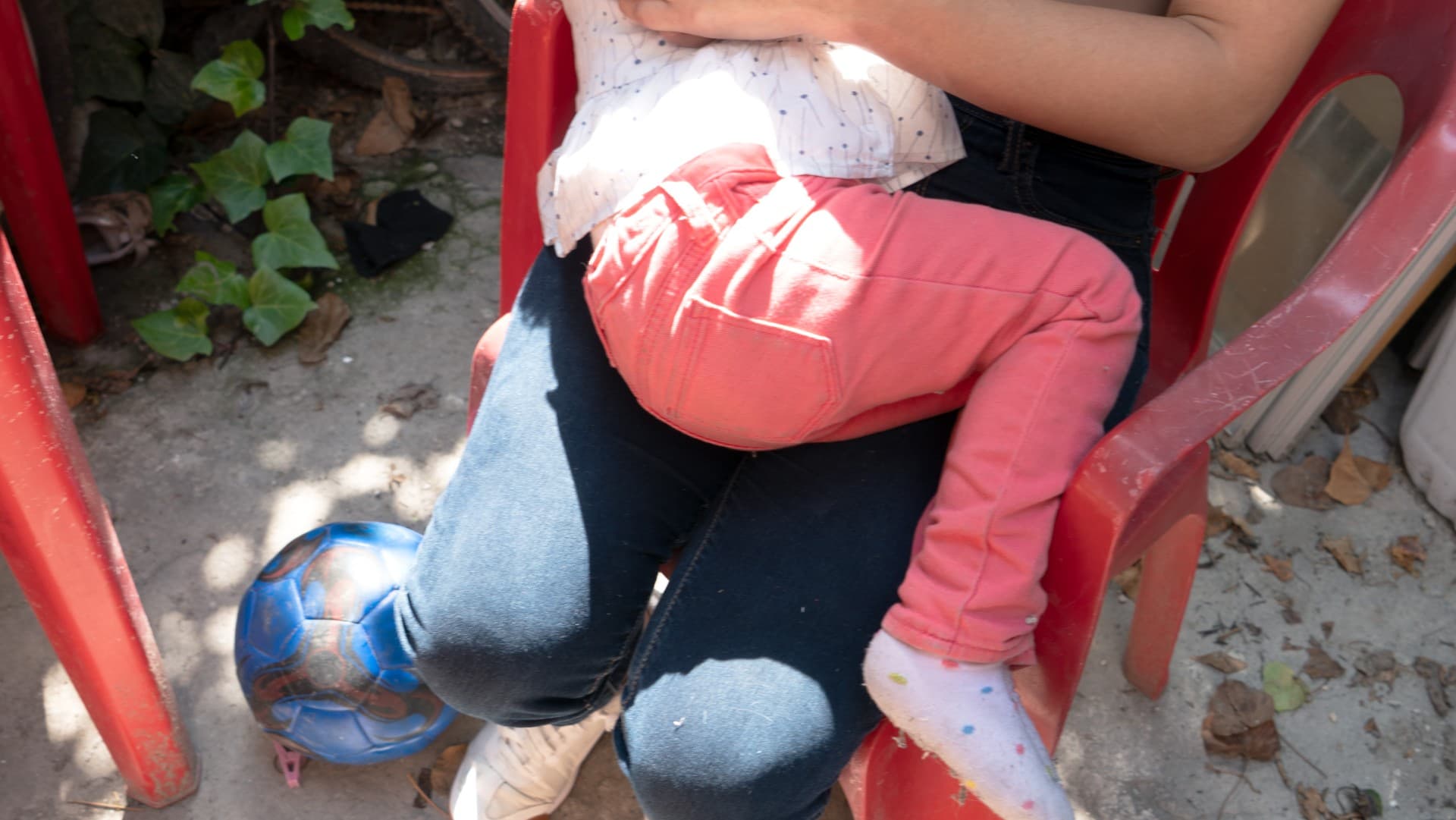
As Clara was born without the financial support of either her father or Rosa’s family, Rosa had to navigate motherhood largely on her own. After giving birth, she lost many of her online clients due to the demands of childcare and lack of time, although some empathised with her new living situation and did not mind when she breastfed or cared for Clara during therapy sessions. From the beginning of her pregnancy to the time I came to know her, Rosa had moved constantly from place to place: separating from and reconciling with her daughter’s father several times and alternating between living with her mother and her father.
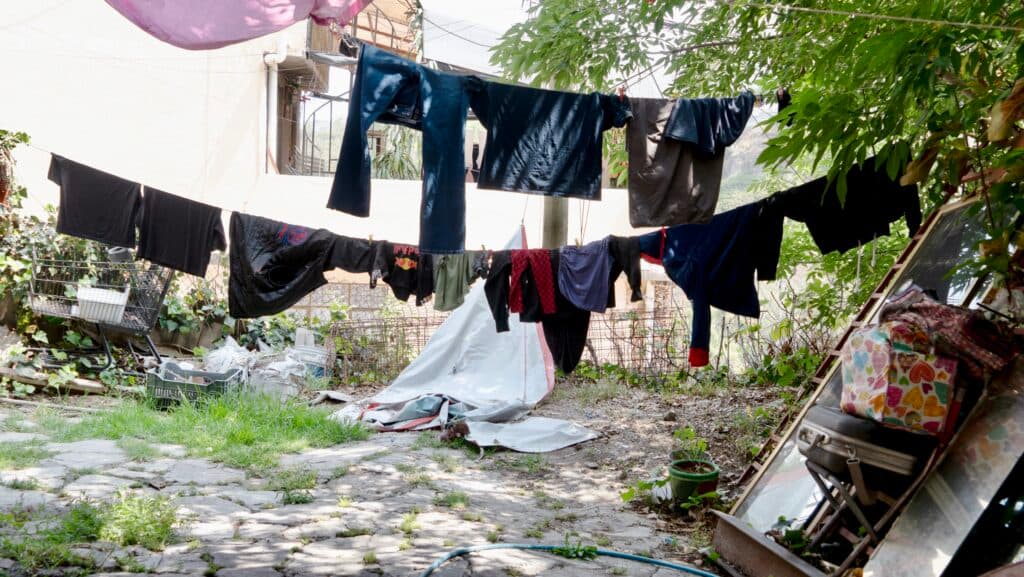
When I visited her in the pueblo of Santa Fe to talk about remote work, Rosa was visibly anxious and exhausted. Clara and Rosa had both been ill the previous week, and she was temporarily staying at a friend’s house. Upon my arrival, Clara’s father called, demanding to see his daughter. Rosa insisted that neither she nor Clara felt well enough to travel across the city, especially with the child still sick. The conversation quickly became tense. Clara, meanwhile, buzzed around her mother like a bee searching for nectar, whining and throwing objects onto the floor. Before things escalated further, I took Clara into the backyard to play.
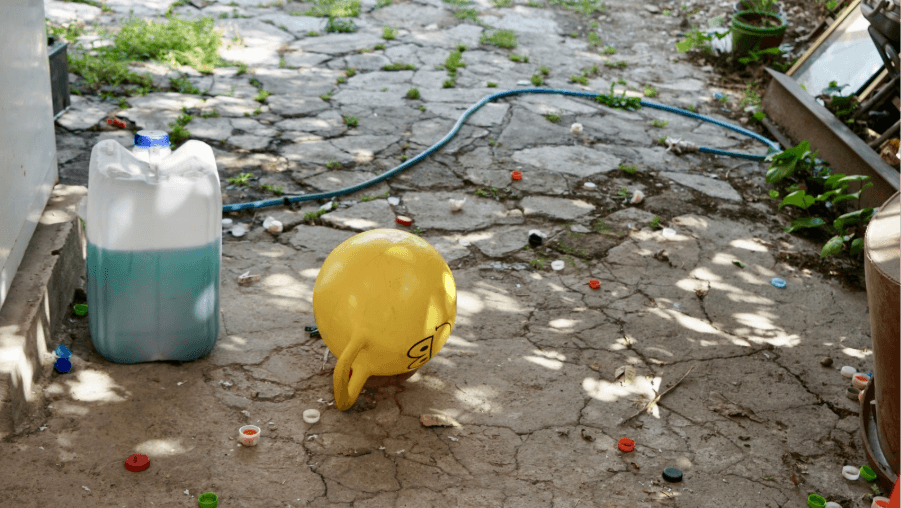
Eventually, Clara’s father agreed to come and pick them up. As Rosa stepped into the backyard to join us, she asked me whether she should tell him that she was living with someone else. I searched for a sensible answer, still trying to make sense of everything unfolding around me while keeping an eye on Clara as she chased a ball around the patio, making sure she would not fall.
“I think it’s better not to. At least until he pays you the maintenance he owes. I get the feeling he might react badly,” I said.
“Yes, you’re right,” Rosa replied, looking worried. She sat down thoughtfully at a red plastic table.
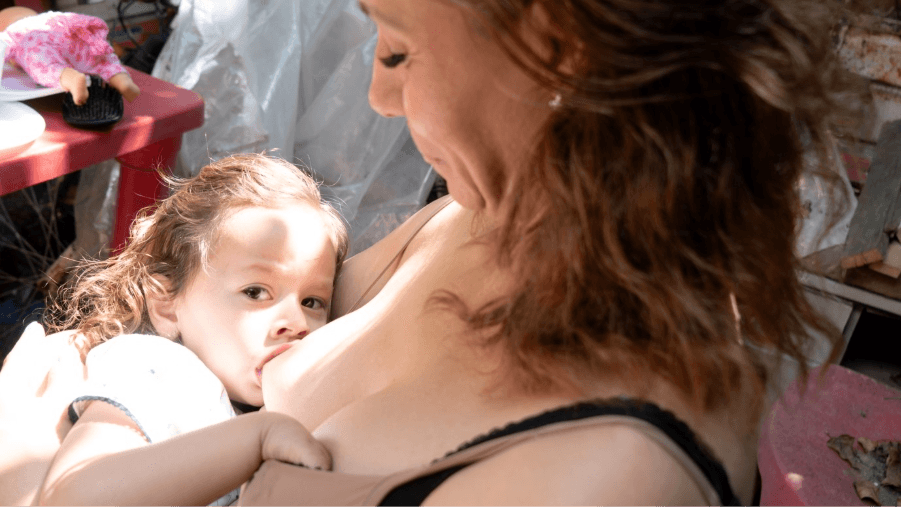
I sat down beside her, and we continued talking - or at least I tried to - about her working routine, hoping, albeit in vain, to distract her from the worries weighing heavily on her. She told me that she wanted to take a course in marketing and social media to help promote her services.
“Nowadays, everything’s done through social media,” she said. “How else am I going to get new clients? I don’t work at the hospital anymore, and in my neighbourhood, nobody can afford therapy.”
Rosa struggled with the shift to work fully remotely, believing that face-to-face interactions remained essential to therapeutic treatment. Yet for herself, she also found online work more convenient, as it allowed her to care for her daughter, wake up later when exhausted, and begin sessions without commuting for hours across the city or paying the high office rent.
“I’m my own boss,” she told me while showing me her WhatsApp profile picture. “You see, behind this polished image of myself in a suit, posed inside a ‘proper’ office,” she laughed before continuing, “there’s a whole world people don’t know about. Don’t you think we’d be happier if we could share it - if we could show our true selves?”
Rosa’s willingness to share her fragile living circumstances with both her clients and me reminded me of the importance of approaching social change through a lens of ‘radical compassion’ to understand the multiple ways in which people articulate and navigate struggle (Lazar, 2023). While critical accounts of the digitalisation of work- and not without justification- have conceptualised digital labour as an intensified form of alienation and exploitation that extends even into the sphere of intimacy itself (Besserer and Ruiz Grajales, 2023) understanding labour as a form of care (Narotzky and Besnier, 2014) may also illuminate the distinct social possibilities that remote work can open up in ways that other forms of labour cannot.
Besserer, F., Ruiz Grajales, D.E., 2023. Economía política de la intimidad. Una etnografía expansiva de las memorias, los imaginarios y los conocimientos en tiempos de excepción por Covid-19, in: La Explotación de Lo Íntimo: Memorias, Imaginarios y Conocimientos Bajo Covid 19. Universidad Autónoma Metropolitana, Unidad Iztapalapa/División de Ciencias Sociales y Humanidades, México, pp. 9–52.
Lazar, S., 2023. How We Struggle: A Political Anthropology of Labour. Pluto Press, London.
Narotzky, S., Besnier., N, 2014. “Crisis, Value, and Hope: Rethinking the Economy:
An Introduction to Supplement 9”. Current Anthropology 55 (9): 4–16.
Iris Pakulla (she/her) is an anthropologist and filmmaker of Spanish, French, German and Polish heritage. She studied social anthropology in the UK and media communication studies and documentary cinema in Spain and France, respectively. She has over 10 years' professional experience in the documentary film sector. Her new research is taking place in Mexico as part of the ERC project, ReWorkChange. During her PhD at the University of Cambridge, which involved fieldwork in Mongolia, she focused on topics such as extractivism, the anthropology of labour, digital political activism, everyday politics, and female reproductive health.