
Fieldnotes from House Visits in Amsterdam
One of the central themes of this research is houses and homes, as we are trying to figure out how working from home is transforming the organisation of space in the house, as well as how it is changing practices of home-making. In Amsterdam, I have been invited to a few houses so far by notable people of a slightly older generation than myself; remote workers in their twenties and thirties tend to instantly take me up on the offer of coffee. Every time someone invites me to their house, I feel a sense of privilege. Being able to enter the home of a stranger is not a common experience in the Netherlands, and Dutch people are often known for being quite private when it comes to having people over. Naturally, I have received these invitations only through other people who then referred me to someone they know, a friend, colleague, or neighbour. I never suggest going to someone’s home when I don’t know them personally, but in these cases, my treat of a drink was countered with coffee at their house. Often, the time that is given is around ten or eleven in the morning, a classic moment for tea or coffee, with the unstated expectation that I will leave before lunch around noon.
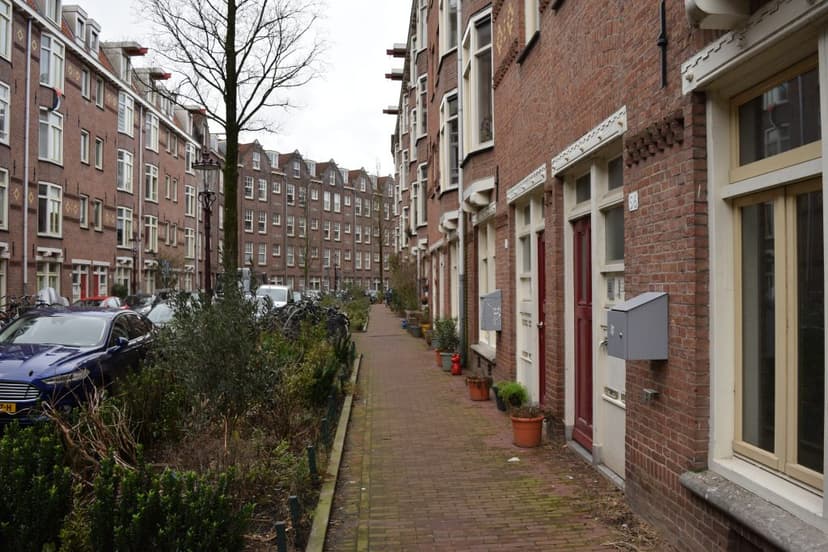
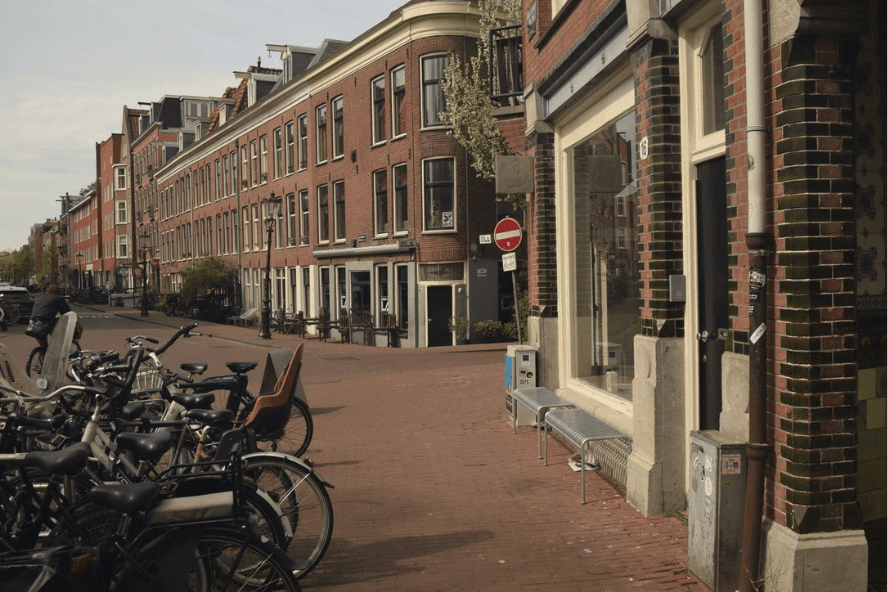
The houses themselves have all seemed quite different at first sight, ranging from two spacious apartments with high ceilings overlooking the water, to a recently renovated compact social-housing apartment, a freestanding house with a design studio downstairs, and a very old apartment with wooden beams on the rather low ceiling. Of course, in the densely populated urban landscape of Amsterdam, apartments are a lot more common than freestanding houses, let alone those that also include a studio space.
Yet, what I felt these houses had in common was that they had all been quite carefully designed and decorated. Most of the people I visited had lived in their home for at least ten years, and a good number for twenty. In these homes, it was particularly visible how the space had been shaped over the years, renovated, rearranged, redecorated, and adjusted, and how remote work had been introduced into the home: a guest bedroom turned into an office during the pandemic, or a desk was added to the living room.
One person and his house stood out to me, namely Stijn, a 61-year-old Dutch man, and his apartment with the wooden beams, where he lives by himself. From the moment I entered his house, I noticed the artwork everywhere, paintings, small sculptures, on the walls and floor, but also covering half of the kitchen ‘island’; there was an impressive array of small fossils carefully strewn about, and I was too worried about disrupting it to even lean on the countertop as Stijn was making us a big batch of filter coffee. The display of fossils gradually changed into everyday items, suddenly there was a phone charger, a receipt, a pen, in a kind of natural, casual order; it was not messy but seemed unplanned. As we sat down at a big white glossy table with coffee and two croissants, Stijn started telling me in a very conceptual way about the artworks and how much they mean to him.
He pointed to three grey tiles on the floor behind my chair, and I had rightly guessed that these too were an expensive piece of art, not to be disturbed, and that they could really make him emotional, yet in a way that he was not able to describe in words. I eventually found out that Stijn makes his income by buying, renovating, and selling houses, that he sees these as projects for his philosophical creativity, and that he is always a little disappointed when they are finished. The current apartment that he lived in had been worked on for more than a decade and was now finished, a fact that he struggled to accept, as it meant that he would be looking to move on, which also excited him.
Stijn's home was perhaps the clearest example of a house as a lived project, where every item, room, and arrangement carried memory, deliberation, and intention. Yet most of the houses I visited were arranged in this fashion, with items collected over the years together constituting the house as a familiar and homely space. When I told another participant, Karin, who has lived in a beautifully decorated house for the last twenty years with her husband, that I was moving my grandmother into a care home, she told me that I should take photographs of every room of the house; not just of important objects, but of the walls, corners, cupboards, and every ordinary space, to carry with me as a memory. In this way, how these houses have been put together reveals a lot about the introduction of remote work into the home. For instance, Stijn proudly showed me the ginormous hand-built wooden desk that he made himself a few years ago, complete with a green Apple monitor and stacks of books on his favourite artists, as well as some loosely arranged documents and a small statue. I have many more thoughts and observations on houses and remote work, but they are for another blog post.
To conclude, I realise that the houses I have discussed here are all from people who are slightly older and have experienced relatively stable housing trajectories. As they remained in the same home for decades, they had ample time to accumulate memories, routines, and slowly design the familiar. Thus, I wonder what the homes of younger and less stable participants will look like, how people create attachment to more temporary places, where they might still spend a lot of time due to their remote work.
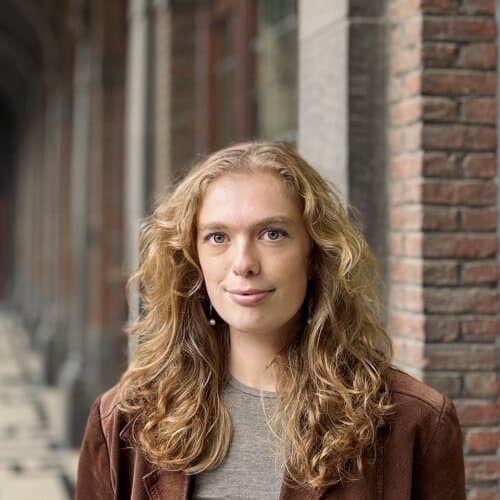
Fiona Holdinga (she/her) completed a bachelor’s and master’s degree in cultural anthropology at Utrecht University. Her research interests include the anthropology of morality and ethics, the nature/culture debate, the multispecies turn, and visual and sensory approaches. For the ReWorkChange project, she will conduct research in the Netherlands.