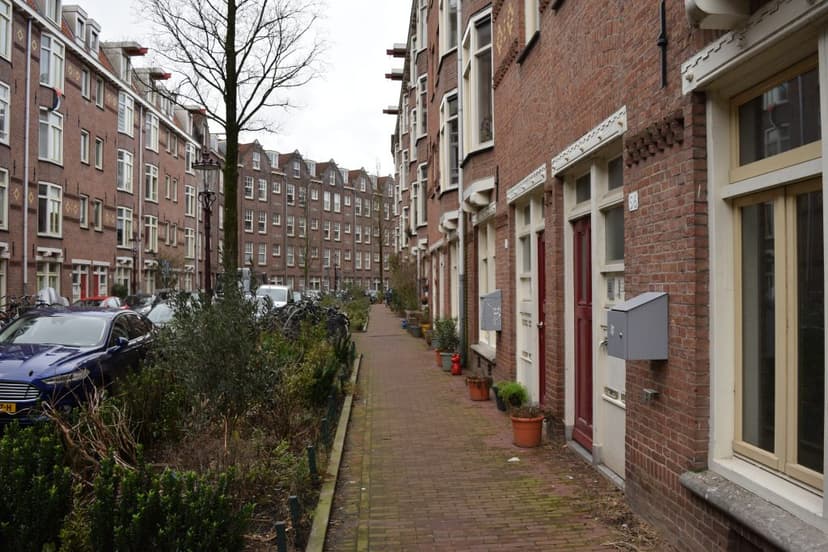

Paying to go to Work? Fieldwork in Amsterdam Co-Working Spaces
For this blog post, I want to write about a question that emerged quite early during my fieldwork: why would anyone pay to go to work? Here I do not mean commuting costs, or buying lunch or coffee while working somewhere. I mean paying a monthly subscription simply to have somewhere to work. I was really confused by this, because if home is not suitable, then at least in the Netherlands there are public libraries that are free, open throughout the week, and provide desks, internet, heating, and quiet places to work. They are not particularly good for meetings and calls, of course, but still. As my fieldwork progressed, however, I realised that this was not really a question about facilities, but about what people imagine good work should feel like, and why particular places seem to have become part of that imagination.
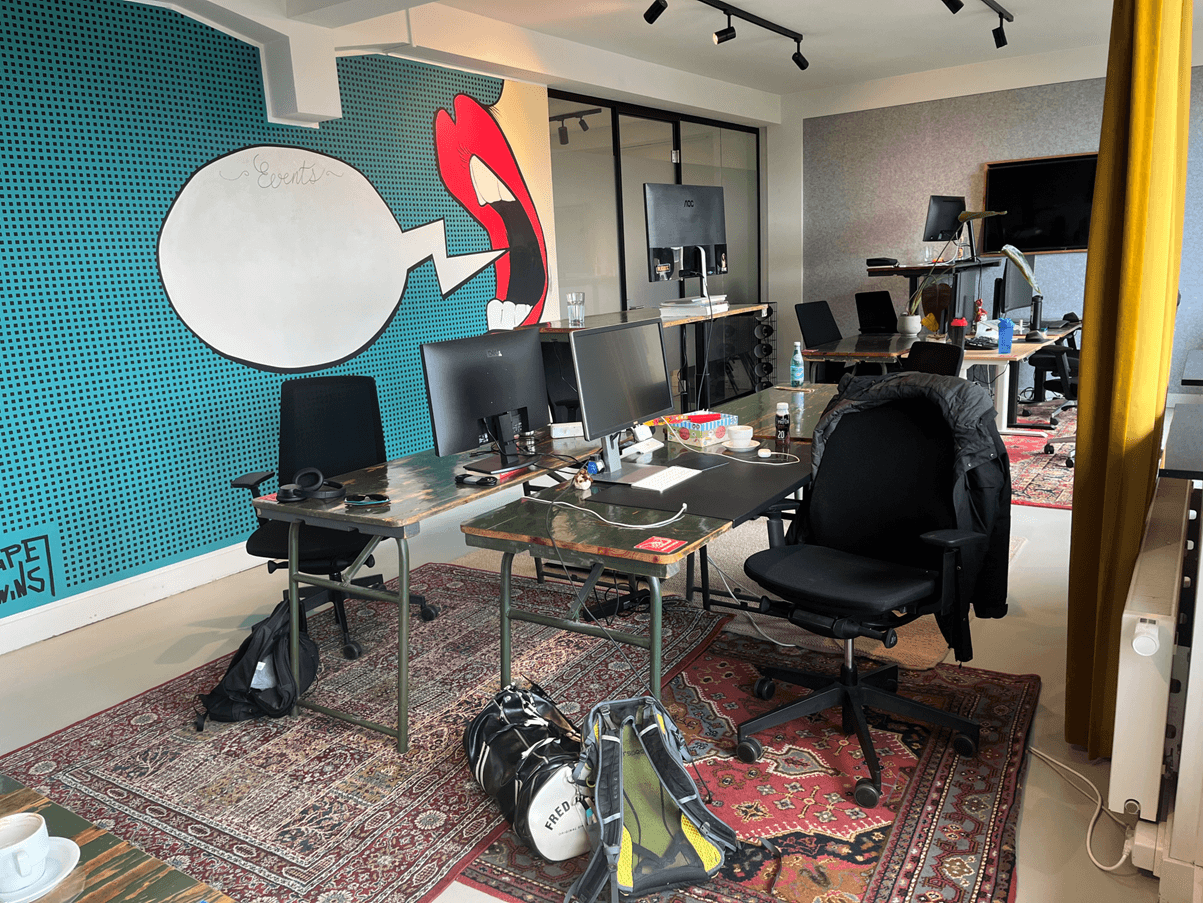
The first time I entered the co-working space where I conduct fieldwork, I was struck by how carefully crafted the atmosphere seemed to be. Downstairs there is a café with soft jazz playing in the background. There were handmade wooden shelves displaying books on travel, plants throughout the room, as well as speciality coffee and granola bowls, and baristas who knew many of the members by name. The space was bright, and felt rather gezellig, a Dutch word for cosy. During a tour, I was shown that upstairs there are four floors of office spaces, with desks that you can use if you have a membership of some kind. The owner founded the co-working space about ten years ago, so it is not a chain brand, and he describes it not as a workplace, but as “a space to live free.” He is quite the traveller and has two boats. Its social media presents a similar image of trying not to come across like a traditional workplace. For instance, a few days after a summer barbecue they posted an Instagram reel with the caption: “POV: you went to a summer BBQ instead of just another networking event.” The more time I spent there, the more I found myself wondering what exactly was being offered here beyond desks or Wi-Fi. What exactly was being sold, and why were people willing to pay for it?
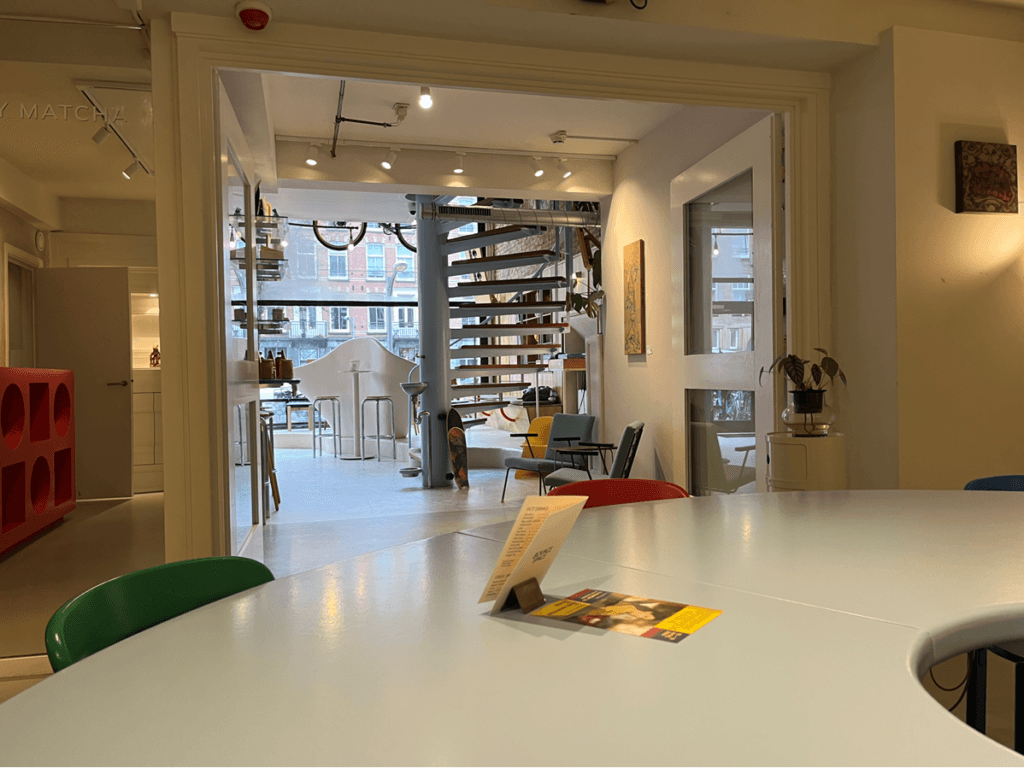
One participant, whom I call Jeroen, helped me start to think about this. We met downstairs one day at a round table when I asked him if he knew whether I could eat my homemade lunch there. He said probably yes. Jeroen is 27, Dutch, and works independently buying art for a private collector. Much of his work consists of researching artworks, searching online auction catalogues, and occasionally attending auctions. When he first started this job, he spent some time looking for a place to work. He told me about visiting different office spaces and co-working cafés and, as an example, described being enthusiastically shown a small white room with no windows. It contained just a desk, two chairs, and some white, fluorescent lighting. As he told me the story, he laughed and said, “My first thought was: do you want me to die here?” I found this reaction fascinating, because technically, the room provided everything needed to work. There was a desk, a chair, internet, electricity. Yet Jeroen rejected it immediately. Instead, he eventually joined this co-working space and said it was exactly what he was looking for. He always works downstairs in the café. When I asked him why, he spoke about “liveliness” and not wanting to be “cut off from life”: hearing people talking around him, seeing people come in for lunch, and having brief conversations with the baristas, with whom he had become friends and sometimes even went for drinks. Listening to him, I began to wonder whether he was perhaps choosing between different ideas of what work ought to be.
In terms of theory, I have been inspired by the work of Kathi Weeks (2011). She famously argues that work is now imagined not only as a way of earning a living, but also as a source of fulfilment and a way through which people become valuable selves (Weeks 2011, 11). She encourages us to ask how work has become tied to ideas of the good life (Weeks 2011, 12), and I am then wondering how place, particularly commodified place, functions in this process. Remote work is a particularly useful site through which to research this since it is often seen as place-independent work and people now decide for themselves where and when they carry out their work. So, I am interested in what exactly they are choosing. What kinds of values become materialised through these environments? What do these spaces suggest about changing ideas of the good working day, and ultimately, what kinds of lives do people hope this work might enable?
Additionally, I really like a recent publication by Jansson, and colleagues titled “The Romantic Workplace: How Coworking Spaces Drive Post-Digital Consumption” (Jansson, Fast & Andersson 2026). They argue that coworking spaces mobilise a neo-romantic imagination, in which ideas of novelty, authenticity, creativity and harmony become embedded in the spatial production of the workplace (Jansson, Fast & Andersson 2026, 15). They connect this to a broader response to the normalisation of digital connectivity, in which coworking spaces offer a sense of place, presence and disconnection within a highly connected working life (Jansson, Fast & Andersson 2026, 3). They therefore argue that coworking has become part of a form of post-digital consumption, where romantic ideals are incorporated into consumer culture and offer a more romanticised version of capitalist work (Jansson, Fast & Andersson 2026, 16).
To conclude, I started with the question: why would anyone pay to go to work? I do not think the answer lies simply in infrastructure, coffee, or community. Rather, these spaces are attractive because they embody ideas about what work should make us feel like, by offering environments that feel creative, lively, connected, and distinctly unlike more conventional office spaces. In that sense, people are not just renting a workspace but choosing places that embody particular ideas about the kinds of working lives people seek to create. Ironically, then, while remote work is often described as place-independent, my fieldwork so far suggests that place may matter more than ever, because particular places have become part of how people imagine and try to realise a good working life. So, the question is now what these places reveal about the kinds of working lives people increasingly feel are worth striving for, and why certain atmospheres have become part of that pursuit.
Bibliography
Jansson, A., Fast, K. & Andersson, M. 2026. “The Romantic Workplace: How Coworking Spaces Drive Post-Digital Consumption.” Media and Communication, 14. https://doi.org/10.17645/mac.11281
Weeks, K. 2011. The Problem with Work: Feminism, Marxism, Antiwork Politics, and Postwork Imaginaries. Durham: Duke University Press.
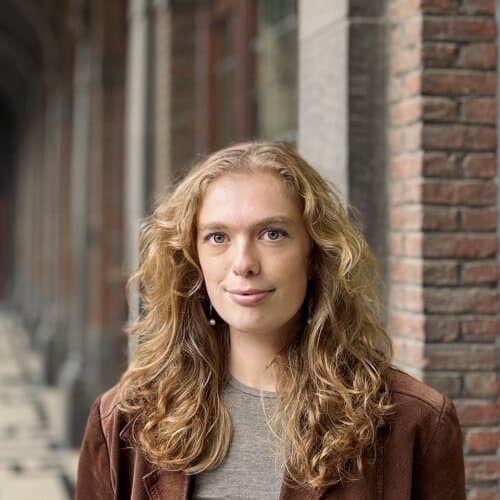
Fiona Holdinga (she/her) completed a bachelor’s and master’s degree in cultural anthropology at Utrecht University. Her research interests include the anthropology of morality and ethics, the nature/culture debate, the multispecies turn, and visual and sensory approaches. For the ReWorkChange project, she will conduct research in the Netherlands.