
Remote Work and a Sense of Belonging Among Knowledge Workers Migrants in Brussels
Brussels is a highly international and dynamic city where remote or hybrid work has become the norm in the majority of sectors. The knowledge workers that I have interviewed often spend more time working remotely than in the office. Most are still expected to be physically present at least two days a week, but their professional lives are no longer centred entirely on a fixed workplace.
As someone who belongs to this migrant community and has worked in hybrid arrangements for much of my career, I have become interested in how people experience belonging while living abroad. What happens to our social connections when everyday working life is no longer organised around a shared office? And how do people develop meaningful relationships with the places they inhabit when mobility and flexibility have become defining features of contemporary life?
The majority of people I have interviewed so far have international educational backgrounds and work in occupations based largely on computer use, including the creative industries, consultancy, office-based employment, and freelance professions. They work from homes, cafés, libraries, and co-working spaces, and their professional arrangements often allow considerable geographical mobility.
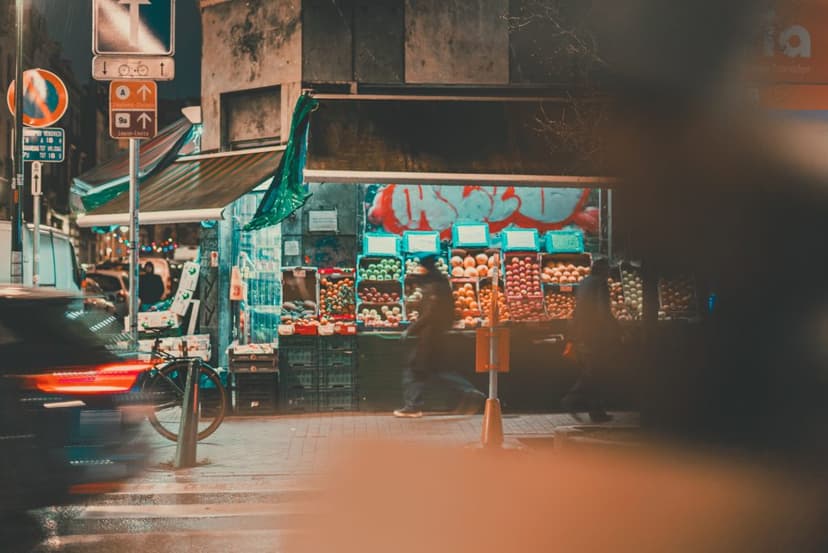
My fieldwork takes place mainly in Saint-Gilles, a vibrant and densely populated neighbourhood in Brussels. The area offers many spaces for interaction beyond the home: cafés, bars, terraces, public squares, and a large park that quickly fills with people when the sun shines. During a walk through the neighbourhood with Lola, we encountered friends and acquaintances every few minutes. This experience makes me see Saint-Gilles as a place of familiarity and sociality.
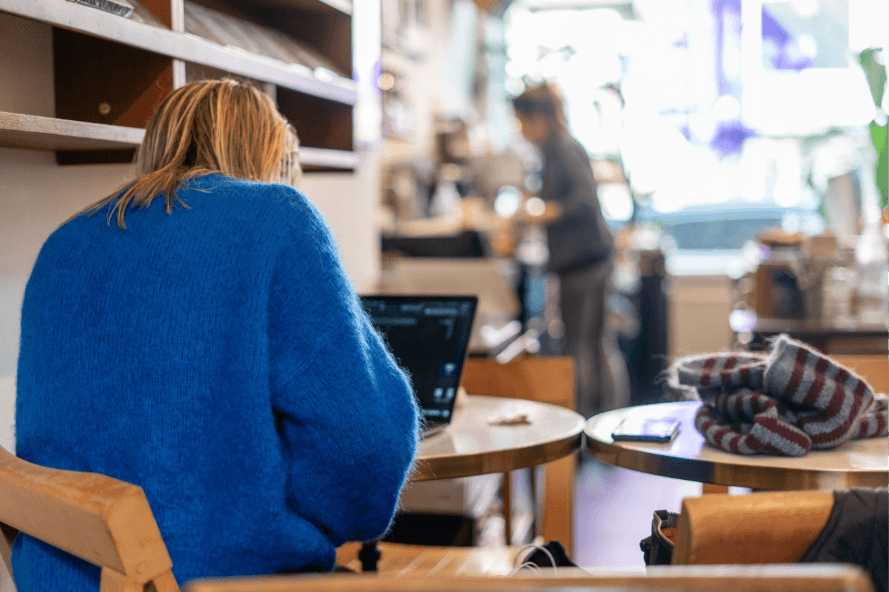
The early stages of my research suggest that belonging is not fixed. Remote workers often feel “in place” through familiar practices, such as international café culture. Cafés can provide recognisable environments rooted in transnational aesthetics (Parasecoli and Halawa, 2021) across cities such as Brussels, Milan, Mexico City, or Delhi.
Renata, a woman in her 40s who moved to Belgium from Poland to pursue a PhD, regularly works in a café near her home. “It’s basically my living room,” she told me. For her, cafés offer a productive form of “nice chaos”. Administrative tasks are easier to complete amid movement and background noise, while more concentrated work can be done at home or in a library.
Cafés also provide small rituals that structure the working day. Renata described ordering a good coffee and deciding to answer three emails before finishing it. Coffee becomes both a pleasure and a form of motivation.
However, belonging to a group does not always create a sense of belonging. Office environments can impose shared rhythms and expectations that feel restrictive. Renata associates the office with “putting on a mask”. Cafés, by contrast, offer anonymous co-presence: people share a space without being required to interact.
For others, remote work creates stronger connections with family and friends. Lola, a 36-year-old consultant working on gender equity, travels frequently and works entirely online. She can work from her parents’ homes or from her grandmother’s house in the countryside. She describes this flexibility as a privilege because it allows her to combine professional responsibilities with seeing family and friends, which she visits frequently in Barcelona, where she once lived. Friedman’s (2002) suggestion that “roots” are increasingly replaced by “routes” is particularly relevant to Brussels-based remote workers, many of whom have transnational or cosmopolitan identities.
Many interlocutors locate their main sense of belonging outside work. They find it through friendships, housemates, family connections, and activist groups. Remote work does not necessarily reduce sociality; instead, it can shift social life towards relationships people choose more intentionally.
Working from home can also increase people’s presence in their neighbourhoods. Lola told me that when she works from home, she has more time to discover local places, talk to shopkeepers, and run into people she knows. Carlos, in his early 30s, moved to Brussels from Hamburg about three years ago. He combines a bar job with remote work for a cultural agency in Germany. He also said that being at home more often has made him feel “more present” in the neighbourhood. He also described how he likes to look out of the window, take walks, and go out for small snacks in-between his work-related tasks. Anton, an Italian man in his 40s, who has lived in Saint-Gilles for nearly twenty years, similarly feels that working from home has strengthened his attachment to the area. Because he is no longer away for nine hours a day, he can make greater use of local cafés, shops, and restaurants. Repeated encounters and everyday familiarity have deepened his sense of rootedness.
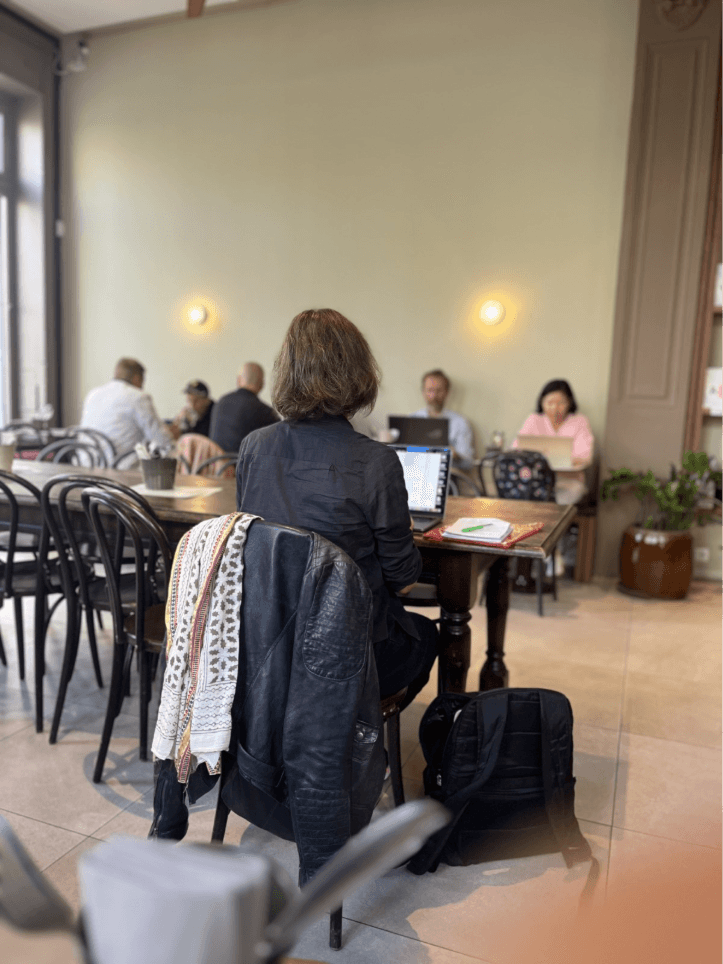
Yet these forms of belonging are not equally available to everyone. Working in cafés requires money, time, and cultural knowledge. Participation in cosmopolitan urban spaces is often mediated by consumption and therefore depends on both economic and cultural capital.
Remote work can create new opportunities for connection, but it does not eliminate inequality. For knowledge workers who are also migrants in Brussels, belonging is created through routines, relationships, mobility, and participation in shared spaces. It is an ongoing process of searching and finding their place in the city
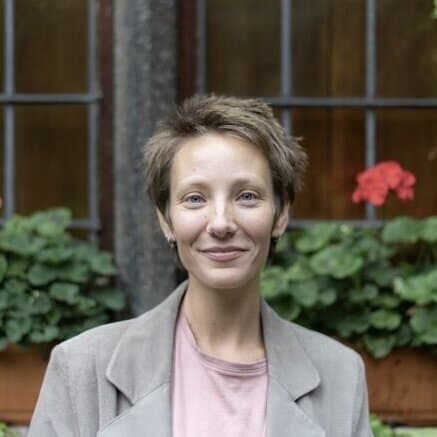
Aleksandra (Ola) Gracjasz (she/her) holds a PhD in Cultural Anthropology from Leiden University and Master's in Cultural Anthropology from Utrecht University. Her PhD formed part of the ERC-funded Food Citizens? project led by Prof. dr. Cristina Grasseni, in which Ola has carried out fieldwork in Gdańsk, Poland, looking at contemporary forms of citizenship enacted and manifested through involvement in a food-related network. Through her doctoral and master's research she has integrated photographic practices and theories. In the ReWorkChange project, Ola will carry out ethnographic research in Brussels, Belgium.