
The Culture of Productivity: Remote Work as a Scene for Self-discipline and Time-Management
One of the biggest challenges of carrying out fieldwork in Brussels has been finding a suitable time to meet people for interviews. While I am myself juggling research with teaching responsibilities (and a few side projects, such as teaching yoga and photography), my research participants are rarely available. Additionally, Belgium is divided into Flemish and Walloon regions, and certain holidays are separated. In practice, this means that instead of two weeks of school holidays around Easter for the whole country, there are two weeks for the Flemish region, followed by two weeks for the Walloon region. As it is not always obvious who takes holidays when, I lately had the impression that the whole country was on holiday for a whole month.
In late February, when I asked Lavia for an interview, she proposed a Monday evening three weeks later as the earliest possible date. She works full-time for the European Commission and is also the leader of a band that has been touring since they released an album last summer. When she is not working for the EU, she organises concerts and rehearsals, tasks that can amount to more than 30 hours a week. While she admitted that she sometimes has rehearsals in the afternoons during working hours, during which she merely moves her computer mouse from time to time. She summed it up by saying: “Well, it’s a lot... The concerts are at night or at weekends, so I manage to combine everything that way too.” No wonder she struggles to find a free evening for a two-hour interview with me.
Samia also works full-time for the European Commission. She confirmed that it is the kind of job that requires a great deal of brainpower and time investment. It has not prevented her, however, from completing yoga teacher training last year and starting to teach yoga classes once a week on the other side of town from where she lives. The main reason she finds it difficult to meet me is that she is often away on "work holidays”. Working for the EU has its advantages, such as a certain number of days per year that one can use for “working from home” — that is, being in the same country but not going to the office — as well as for “working from one’s country of origin”. Samia has become very skilled at combining official bank holidays with her available days for working from her home country, yet she often goes somewhere else instead, somewhere warmer, or where her friends live. Her last “work holiday” was in Madeira for a short week. One could say that she combines work and holidays in a savvy way while still fulfilling her duties. On the other hand, her holidays are often centred around work rather than being a time for rest and recharging.
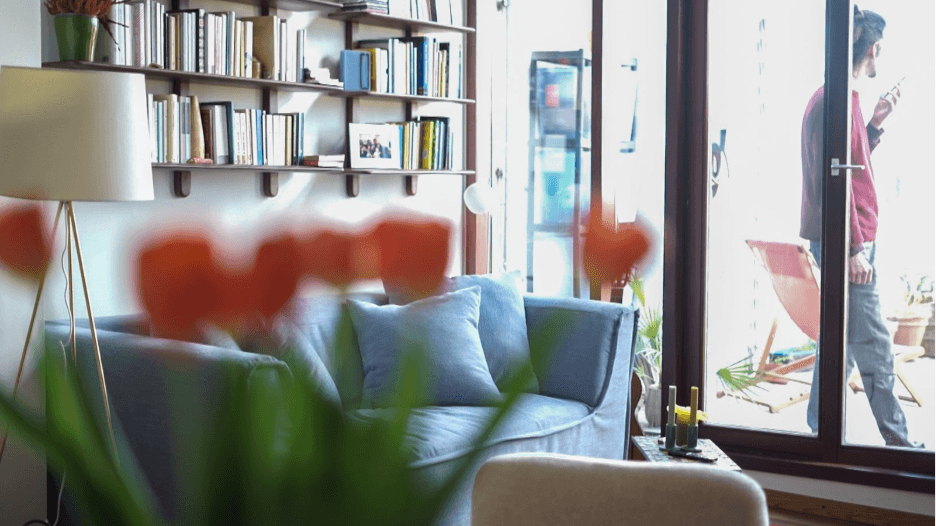
Anton, the father of a six-year-old, works on a hybrid basis. He has to go to the office twice a week, and “those days are sacred”, as he says. He does not book any appointments on those days and is unavailable for school- or house-maintenance-related activities. When working from home was still relatively new for him, he used his lunch break at work to go to the gym. However, now that he works from home, he has started experimenting with his schedule. He admitted, with only a barely perceptible hint of discomfort, that he goes to the gym during working hours and, if the task needs finishing, he works longer in the evening, if his parental responsibilities allow. His “gym time” seems to be work time spent productively in another way, so he does not feel bad about taking that time to work out.
Felina also has a full-time job. She works for local television. On the side, she creates a podcast and organises workshops for children on podcast creation. For Felina, it is a job that does not provide sufficient funds, but one that gives her “a sense of meaning”. She stretches her working hours so that she can fit in her extracurricular responsibilities. She works a lot and seems satisfied with the sense of productivity she achieves. Being productive during her official working time gives her a sense of permission to use working hours for other activities from time to time.

These stories have several things in common. Apart from the fact that they all describe the lives of hybrid workers, that is, people whose jobs require them to work from the office at least once a week, they also paint a picture of people whose schedules are filled to the brim with non-work-related activities. All of the people mentioned above appreciate the balance of working from home and having to go to the office occasionally. According to their stories, the main benefit of working from home is greater flexibility in organising working time and tasks, as well as less travel time, which allows for longer sleep, a benefit mentioned by two participants. However, I have observed that while people gain sleep time otherwise spent commuting (and, in a capital city like Brussels, commuting is not always peaceful: metros tend to fill up during rush hour, especially in the colder months, there are frequent malfunctions and delays, and the traffic in the city is tiring) and say that they can manage their working time according to their daily needs and rhythms, they tend to fill this newly regained time with non-work-related activities that reflect the ever-present trope of productivity. The vast majority of the people interviewed so far are, instead of simply relaxing, doing something, whether it is an extra job (often fulfilling another desire, or a job that does not generate enough income to be their sole occupation), a visit to the gym (to produce a fit body), a trip to the shops, and so on. While all these activities may fulfil certain personal needs, perhaps inspire and stimulate, and even function as a mental break from work, what I am confronted with are people whose schedules are extremely full for weeks on end.
Productivity, being useful, being visible, and finding one’s true calling — all these are elements of identity pushed to the fore in the current socio-economic reality. “Using one’s time well” echoes the height of the COVID-19 pandemic, when the Internet was dominated by narratives on investing your time wisely (Chattopadhyay 2021). In her article on Indian middle-class time management during the pandemic, anthropologist Chattopadhyay (2021) describes the increased pressure on discipline and, therefore, productivity as a way of dealing with the sudden, enforced time at home. In the context of remote workers in Brussels, when people work from home, they are also confronted with self-enforced discipline, as they are the only ones truly surveilling themselves. Even when companies require employees to log in at a certain time and be “visible” or “available” during working hours, there is no one really checking how much one works or whether activity on the computer is a realistic reflection of an employee’s work. The employee is thus developing another level of awareness, related to calculating time spent working and analysing the amount of work done: “Was it enough?” “Does the lunch break count as working time?” “If I do this other thing really quickly, no one will notice that I was not actually at my computer but at a gym”, “Maybe I will have to work an extra hour or two or three in the evening for my own peace of mind”. This added level of self-control and time management raises questions about work ethics, fairness, and morality. Could the remote workers be considered “the enterprising citizens” (Gooptu 2013) - self-governed and self-disciplined urbanites who take the responsibility for their work and off time - a category shaped and fueled by the neoliberal rationale?
Additionally, the pressure to be productive with one’s time, both work time and gained time, and use it well, to the best possible extent, adds further pressure to the already oversaturated daily lives of urbanites. The characteristic of “productivity” serves as an excuse for doing things that are not related to the main job. The culture of productivity seems to be sweeping across various dimensions of existence. Even places that were initially created for relaxing, chatting, and leisure, such as cafés, are now turning into places of focus, work, and productivity.
BIBLIOGRAPHY
Gooptu, N. (2013), ‘Introduction’, in Enterprise Culture in Neoliberal India: Studies in Youth, Class, Work and Media, (ed.) N. Gooptu (Oxford: Routledge), 1–24.
Chattopadhyay, S. (2021), The Pandemic of Productivity. The Work of Home and the Work from Home. Anthropology in Action, 28 (1): 47-51.
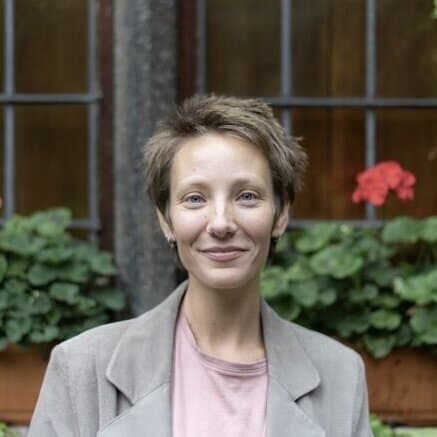
Aleksandra (Ola) Gracjasz (she/her) holds a PhD in Cultural Anthropology from Leiden University and Master's in Cultural Anthropology from Utrecht University. Her PhD formed part of the ERC-funded Food Citizens? project led by Prof. dr. Cristina Grasseni, in which Ola has carried out fieldwork in Gdańsk, Poland, looking at contemporary forms of citizenship enacted and manifested through involvement in a food-related network. Through her doctoral and master's research she has integrated photographic practices and theories. In the ReWorkChange project, Ola will carry out ethnographic research in Brussels, Belgium.