
The Localised Co-Working Spaces
“We are losing the spirit of co-working! What we see now in the market is often not a narrowly defined co-working space which advocates equality, decentralisation, and anti-hierarchy, but a reinvention of a conventional office space commonly found in China.”
One early morning, I was at a neighbourhood Starbucks, sitting opposite Mason, a former manager working at WeWork—a global co-working chain that has opened 30 branches across Shanghai. Mason now works in commercial property consulting, specialising in the investment, purchase, and rental service of co-working spaces in Shanghai. He has worked in this industry for more than a decade.
Mason described two concepts. One is what he called the narrowly defined co-working space, a concept originally imported from the U.S., where small entrepreneurship and flexible working are booming. He explained that when WeWork, a U.S. company, entered the Chinese market in 2016, it was mainly targeted at entrepreneurs, especially those working in the internet industry. However, they soon realised that they had been overly optimistic about the number of entrepreneurs. The market turned out to be far more niche than they had expected, leaving many of their office spaces underoccupied. In contrast to this bleak outlook, another concept—the more broadly defined notion of co-working, as Mason explained—continues to shape the market today. This refers to the offices renovated and managed by a large number of “sublandlords”. Those office spaces often constitute a number of small private offices shared by different small enterprises and startups. In some of these offices, we could see the trace of a more conventional office layout typical of Chinese companies: instead of being nonhierarchical and open, it sometimes locates bosses’ offices and staff’s dedicated desks in separate areas. Mason concluded that this derives from the difference in working ethos—a concept rooted in Euro-American working culture and one rooted in Chinese working culture.
Now in the (broadly defined) co-working space market in Shanghai, various types (of co-working spaces) coexist to cater to diverse needs. The majority of the market serves corporate clients—either small businesses or large corporations using these spaces as satellite offices. In one of the largest WeWork chains located in central Shanghai, which occupies an entire three-story standalone building, the majority of the spaces are used by corporate clients that each require around 10 to 20 square meters of office space.
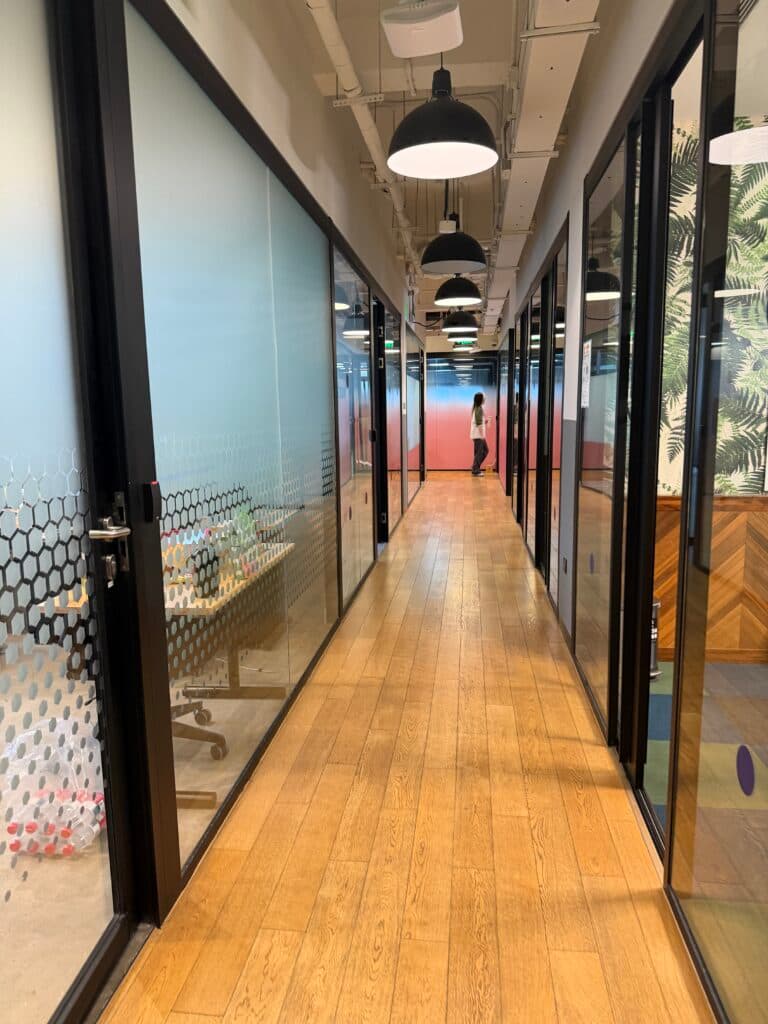
Visitors usually need to use an access badge to enter this designated area. Other remote workers would work in communal areas. According to Mason, those who prefer WeWork tend to be younger professionals with international educational backgrounds who value its open and inclusive working environment.
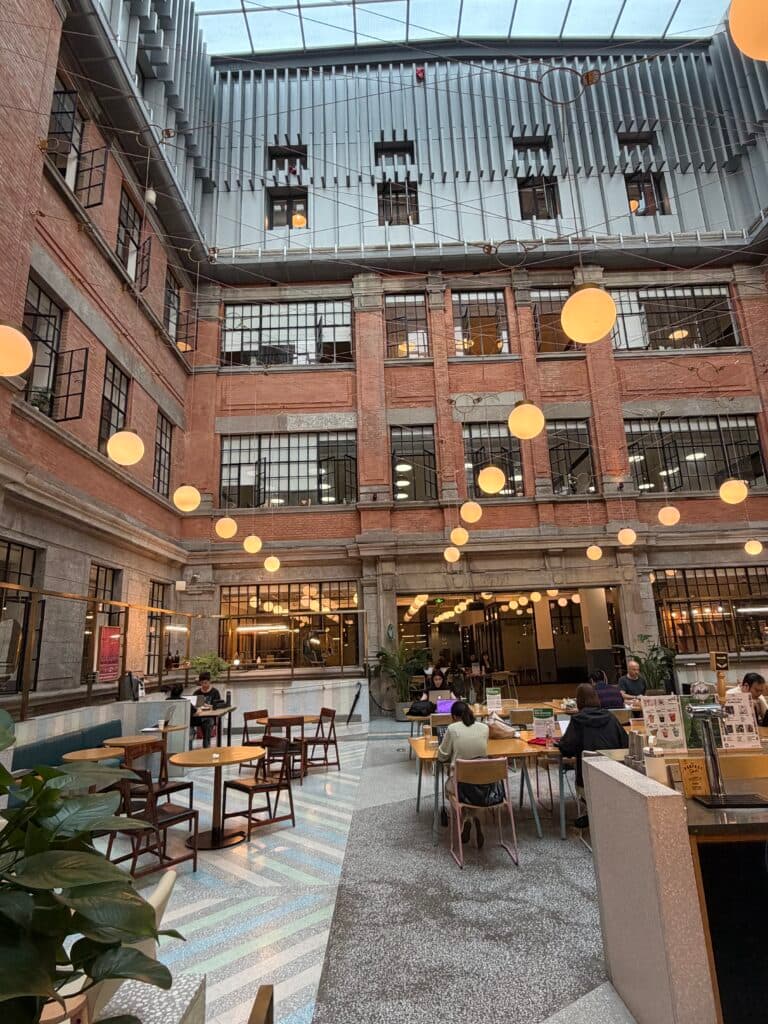
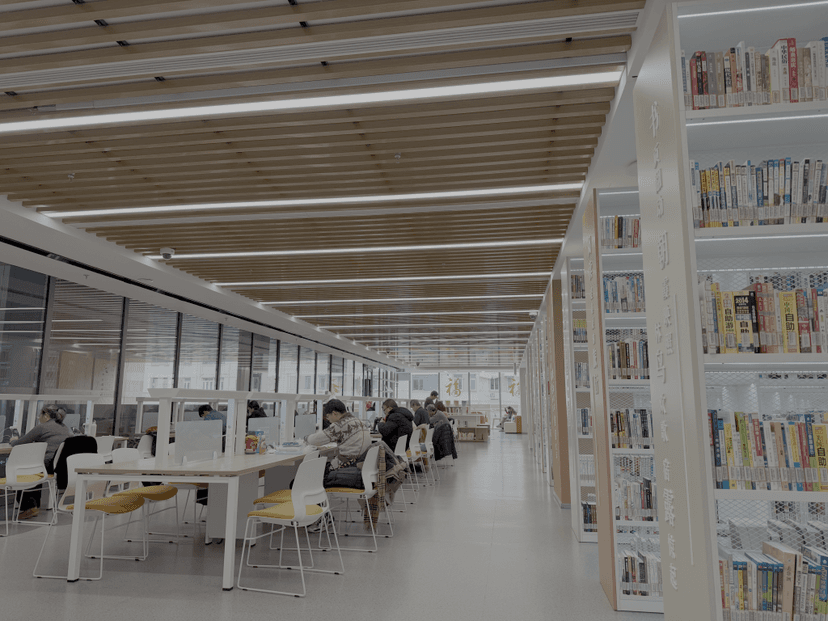
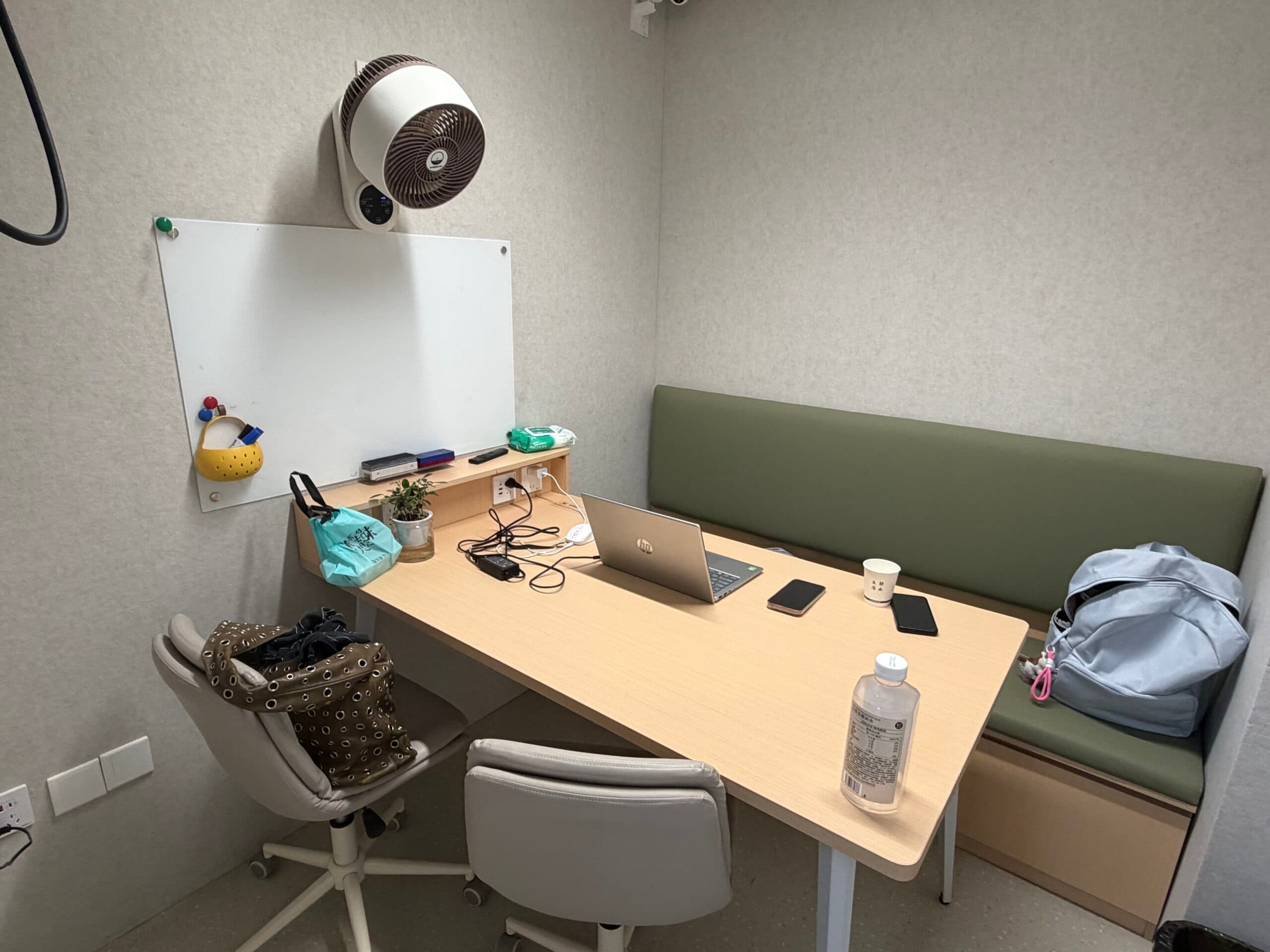
Besides WeWork, other co-working spaces, including both global and local brands, also thrive in Shanghai. Regus, a UK brand, often projects a more “mature” business image through its office design, primarily catering to small businesses and start-ups. There are also numerous local co-working offices—some called “incubators”- specifically for micro and small enterprises (MSEs). Besides spaces more oriented towards business, there are also spaces designed to meet individuals’ diverse study and work needs, such as “self-study rooms” and “work cafés”. Because these spaces interact more directly with their customers, they are often more responsive to customers’ needs. One self-study brand, which has launched more than 30 branches across Shanghai, recently renovated one of its branches based on ideas generated during a design workshop with its loyal customers. Self-study spaces are typically less expensive than co-working offices, yet more compact and modest in both size and design. Their customers may range from students preparing for exams, white-collar remote workers who need a space to work, tutors or therapists who need a quiet booth to work with their clients, or simply someone seeking peace and solitude. Similar to WeWork, the spaces in the self-study rooms are divided into a quiet communal work area and individual phone booths and conference rooms for scenarios that require oral communication.
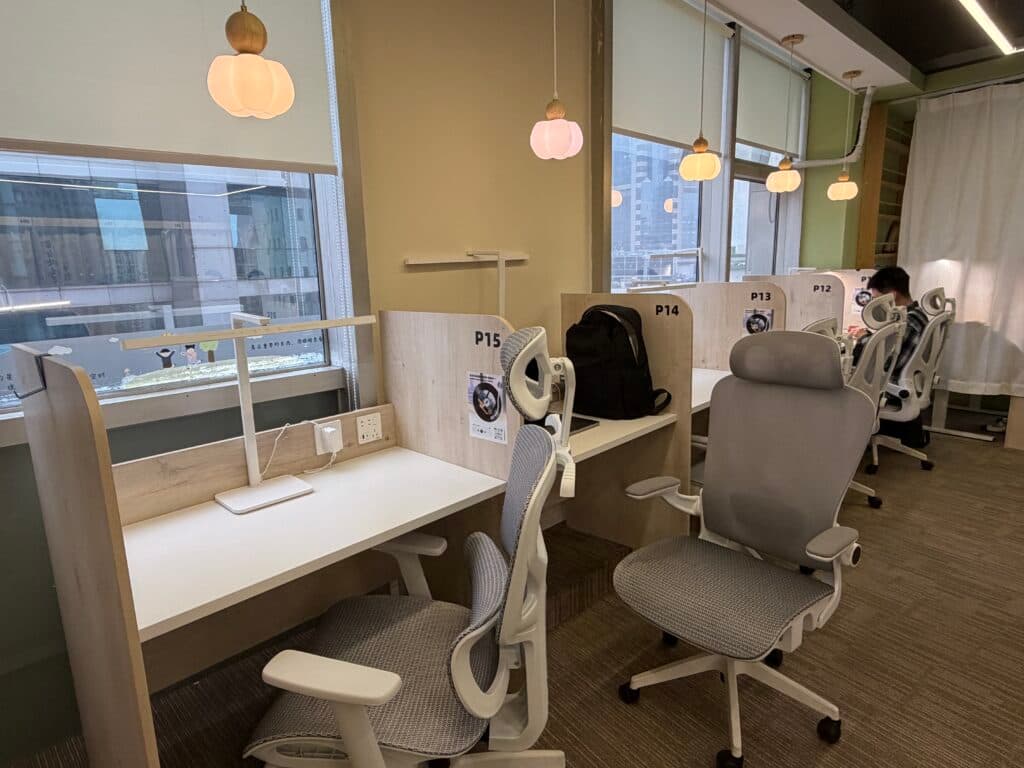
A work café is another type of localised co-working space. Similar to self-study rooms, customers pay an hourly rate for the quiet “focus” space and the small conference room, and can also use the shared, non-quiet area by purchasing a cup of coffee.
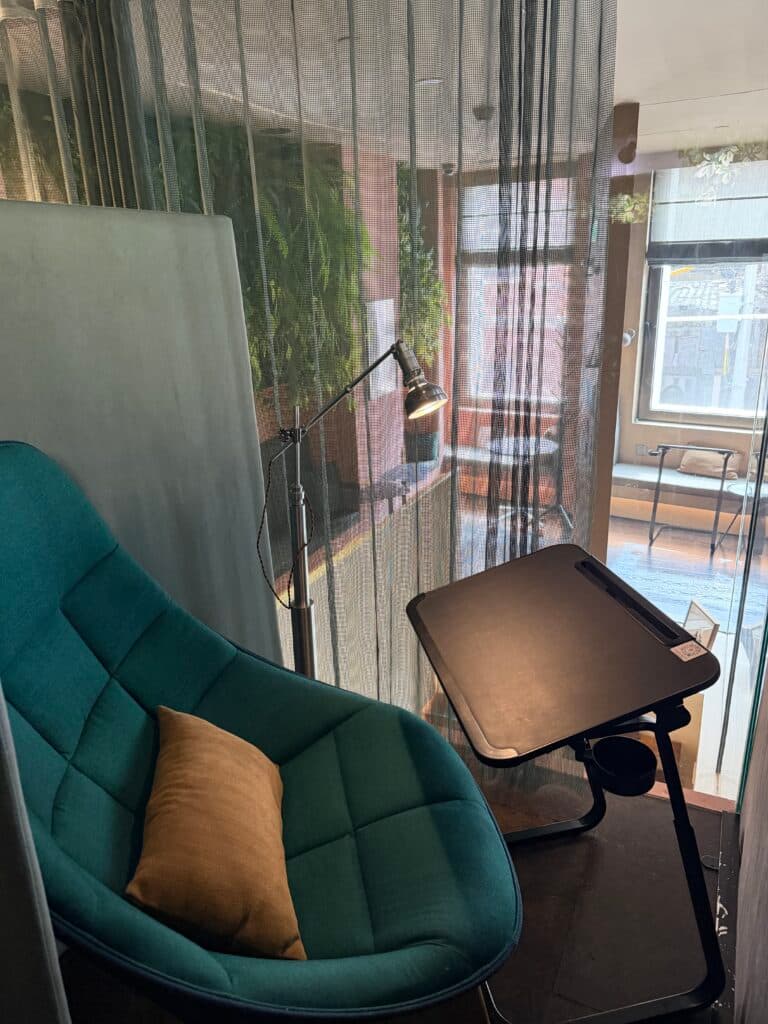
One “work café” brand in Shanghai offers unlimited Americanos called “Focus Coffee”, in line with their belief that staying focused is essential in contemporary life.
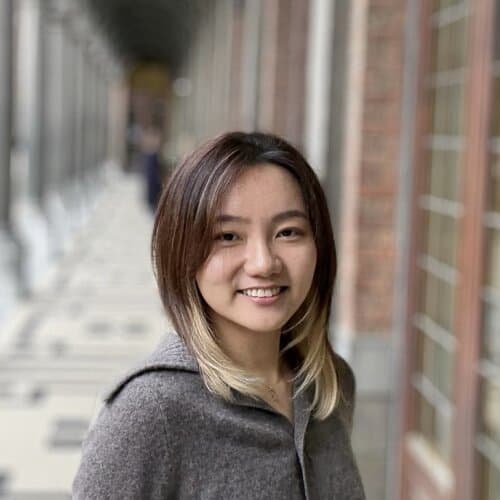
Xiaolin Li is a digital anthropologist. Li’s research explores how digital technologies and material practices shape gender, embodiment, intimacy, and social change in contemporary China. Li completed a PhD in Digital Anthropology at UCL, which examined how FemTech is designed and used within broader practices of menstruation, sexuality, and medicine. As part of the ERC project ReWorkChange, Remote Work and Social Change at the University of Antwerp, Li is currently conducting ethnographic research on how remote work is reshaping everyday life in China.